



A Field Guide to Keeping Coverage From Killing Your Deals
If you sell homes in Florida, you already know insurance has stopped being a formality. Between 2021 and 2025, Florida homeowners’ insurance premiums rose 75 percent, representing almost twice the national increase over that time.
Florida home insurance rates are some of the highest in the nation. Several major carriers have also stopped offering coverage to new customers in recent years. That has turned homeowners insurance into a potential deal-breaker alongside financing, home inspections and even price. A home’s roof age, overall age, and flood zone can turn an easy sale into a hard one. When insurance comes up late, it can blow up a buyer’s budget, delay closing, or kill the deal.
Here’s a recent example from our Clearwater office:
A buyer walked in motivated, with pre-approval to purchase a home. But after the initial insurance quote came back, they weren’t willing to move forward with the home. The 1980s block home sat a few blocks off the water in Pinellas County. It had a newer roof and wasn’t in a flood zone. Age and location still presented an issue for insurance.
Our agent acted quickly. They recommended a licensed insurance professional, ordered a wind mitigation inspection to reveal any additional credits, and helped the buyer find coverage within their budget.
The lesson for Realtors®: talk to your clients about home insurance early in the process.
Below, you’ll find what Realtors® should know about Florida home insurance. We cover the basics, the property red flags to watch for, and how to guide buyers and sellers.
Note: While this article gives an overview of home insurance, Realtors® in Florida shouldn’t advise clients on home insurance. It’s important to work with a licensed insurance professional. Florida insurance laws change frequently.
What Realtors Should Know About Florida Home Insurance in Brief
Realtors®, start the conversation about Florida home insurance early with clients. Don’t wait until the week of closing. Know the factors that affect a home’s insurability and the cost of coverage. These include roof age, the age of the home, wind mitigation features, and whether the home sits in a flood zone.
Educate yourself on hurricane deductibles and the role of Citizens Property Insurance Corporation as insurer of last resort. Finally, connect clients with a licensed insurance professional early. Buyers can then obtain quotes before or during the inspection period, when they still have negotiating power or the option to back out of a contract.
Why Florida Home Insurance Matters During a Real Estate Transaction
Florida insurance isn’t a side issue anymore. It shapes affordability, timing, and whether a deal survives to closing. Here’s why it belongs at the center of your transaction plan.
Insurance Can Change What a Buyer Can Afford
When a buyer is qualifying for a mortgage, their payment is calculated based on principal, interest, taxes, and insurance. If insurance costs are higher than they anticipated, that can impact their ability to make their payment.
In some of Florida’s riskiest areas for homeowners insurance, the difference in cost can be stark. Data from the state’s insurance regulator, as of March 31, 2026, shows a wide range. The average annual premium, including coverage for wind, runs from $2,105 in Sumter County to $7,863 in Monroe County. That’s a 3.7x difference.
Learn more in our guide, Costs Associated With Buying a Home That Agents Must Know.
Lenders Require Proof of Insurance Before Closing
No lender is going to fund a mortgage loan without insurance on the property. Typically, a buyer will need to provide proof of insurance, often referred to as a binder, before closing. If a buyer can’t get or afford homeowners insurance on a property, their financing isn’t going to go through.
Some Homes Are Hard to Insure
Some homes have older roofs or older electrical, sit in high-risk flood zones, or have a claims history. These homes may only be able to get insurance with a few insurance companies or through Citizens. That can make it more difficult to find affordable insurance for a buyer. It can also slow down their closing.
Late Surprises Can Delay or Kill a Deal
If you wait to bring up home insurance with your client, there are a number of ways a contract can be impacted. Insurance quotes could be higher than what a buyer budgeted for. A buyer might have a difficult time finding coverage, causing a delay in their closing. Or, in the worst-case scenario, the contract could fall through.
Florida Home Insurance Basics Realtors Should Understand
You’re not expected to sell insurance to your clients. Still, it’s helpful to understand some common home insurance terms and concepts, so you’re familiar with the language your buyers and sellers may be using.
How Florida Homeowners Insurance Works (and Why Premiums Are So High)
Typical Florida homeowners insurance provides coverage for damage to the house and other structures, the owner’s belongings, and personal liability. It also covers additional living expenses if the owner is displaced from the home. But not everything is covered, such as flood damage.
Cost factors include the increased frequency of catastrophic events like hurricanes, tropical storms, and flooding. Rising losses lead to higher claim payouts. Litigation costs and reinsurance costs (insurance for insurance companies) are rising too. There have been improvements to the market. Still, Florida homeowners will likely continue to see higher-than-average premiums, since there will always be risk.
Hurricane Deductibles
Florida homeowners insurance policies have a separate hurricane and windstorm deductible. It’s typically a percentage of the dwelling coverage amount, such as 2%, 5%, or 10%, instead of a flat dollar amount. For example, say a home has $400,000 in dwelling coverage and a 2% hurricane deductible. The owner would have to pay the first $8,000 if there was hurricane or named storm damage. With a 5% deductible, that’s $20,000.
This can be helpful information for your buyer to know. It’s the amount they’d have to pay out of pocket in the event of a hurricane or named storm.
Roof Age and the 15 Years Rule
Roof age can have a big impact on a home’s insurability. Under Florida Statute 627.7011(5), roofs less than 15 years old are protected. An insurer can’t decline to issue or renew a policy based solely on their age. If a roof is 15 years or older, an insurance company must give the homeowner the option to have their roof inspected. Say the roof has 5 or more years of useful life left. Then its age can’t be the sole reason for declining or not renewing a policy.
So if your client has an older roof, that doesn’t necessarily mean it’s uninsurable. Keep in mind the roof inspector must be approved by the insurer. It isn’t necessarily any licensed roofer.
4-Point Inspections
Sometimes insurance companies will require what’s known as a 4-point inspection before insuring a home, typically if it’s older. A 4-point inspection covers the roof, electrical, plumbing, and HVAC systems. Those are the systems that typically present the most risk. If the home has any aging or outdated electrical, plumbing, or HVAC, it could impact the insurability and cost of coverage. So it’s always helpful to know up front if the home will require a 4-point inspection.
Wind Mitigation Inspections and Discounts
A wind mitigation inspection looks at features of the home that will withstand or lessen the impact of hurricane-strength winds. Examples include the style of the roof (like a hip roof), impact-rated windows and doors, and how the roof is attached to the home. Wind mitigation inspections can help buyers save money. In the Pinellas County example above, it was the wind mitigation report that found the savings that saved the deal.
Flood Insurance
Typical homeowners insurance doesn’t cover flood damage. Flood insurance would need to be purchased separately through the National Flood Insurance Program or through a private flood insurance company. Is the home located in a high-risk flood zone? If your buyer is obtaining a federally backed mortgage, they’ll be required to purchase flood insurance.
Citizens Property Insurance
Citizens Property Insurance Corporation is the insurer of last resort created by the state of Florida under section 627.351(6) of the Florida Statutes. It’s for those unable to obtain coverage on the private market. There are some eligibility requirements.
Generally speaking, a home isn’t eligible for Citizens if:
- It’s a primary residence, and a comparable private policy costs no more than 20% above the Citizens Property Insurance premium. This applies to new policies and renewals.
- Its dwelling replacement cost is $700,000 or more (in most cases).
- It’s in Miami-Dade or Monroe County and its dwelling replacement cost is $1 million or more, as of October 2026.
Insurance Binders at Closing
An insurance binder is proof that a client has secured homeowners insurance effective the date of closing. Most lenders require one. Be sure to remind your buyer to work with their insurance professional to order their binder in plenty of time. That way, there isn’t a last-minute delay keeping them from closing.
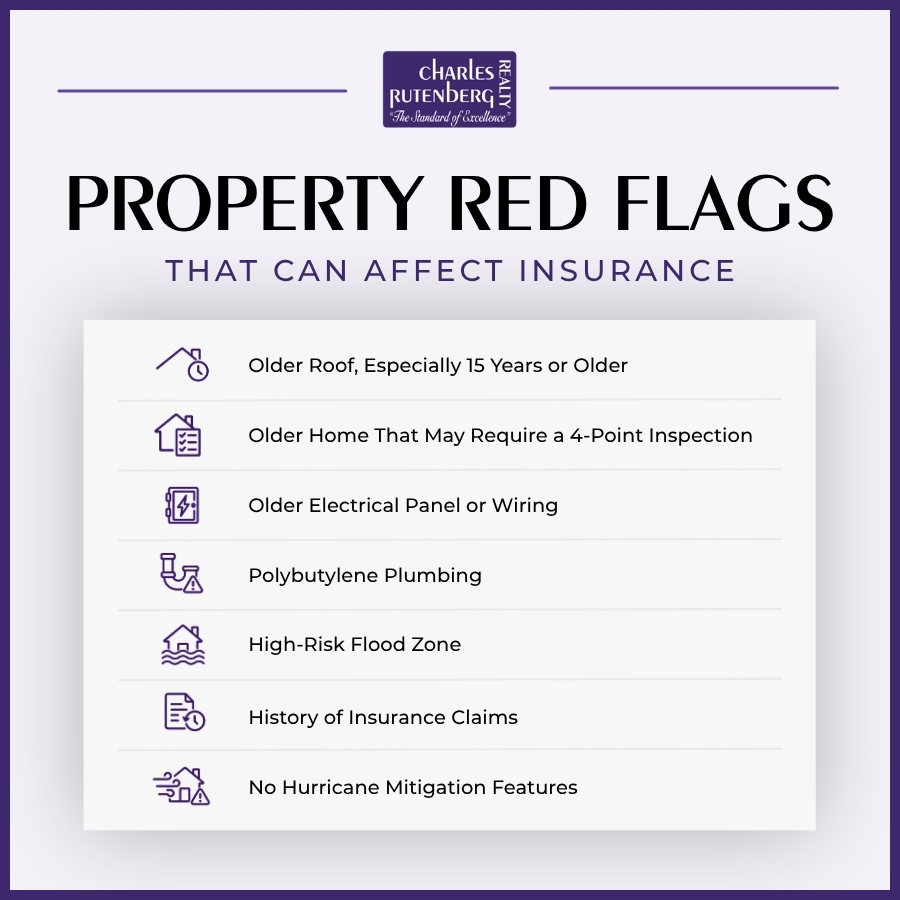
Property Red Flags That Can Affect Insurance
Here are some red flags to look out for, ideally before going under contract, that may impact your buyer’s insurability. Spotting them early lets your buyer get quotes and options from an insurance professional while they still have some control and flexibility:
- Roof is older (especially if 15 years or older)
- Home is older (could potentially require a 4-point inspection)
- Electrical panel or wiring is older
- Polybutylene plumbing (not insurable by some insurance companies)
- Located in a high-risk flood zone (would need flood insurance)
- History of insurance claims
- No hurricane mitigation (no impact windows or shutters, roof not strapped, etc.)
Instead of guessing about insurability and cost, connect your buyer with a licensed professional early. They can get some ballpark numbers so you can make decisions with as much information as possible.
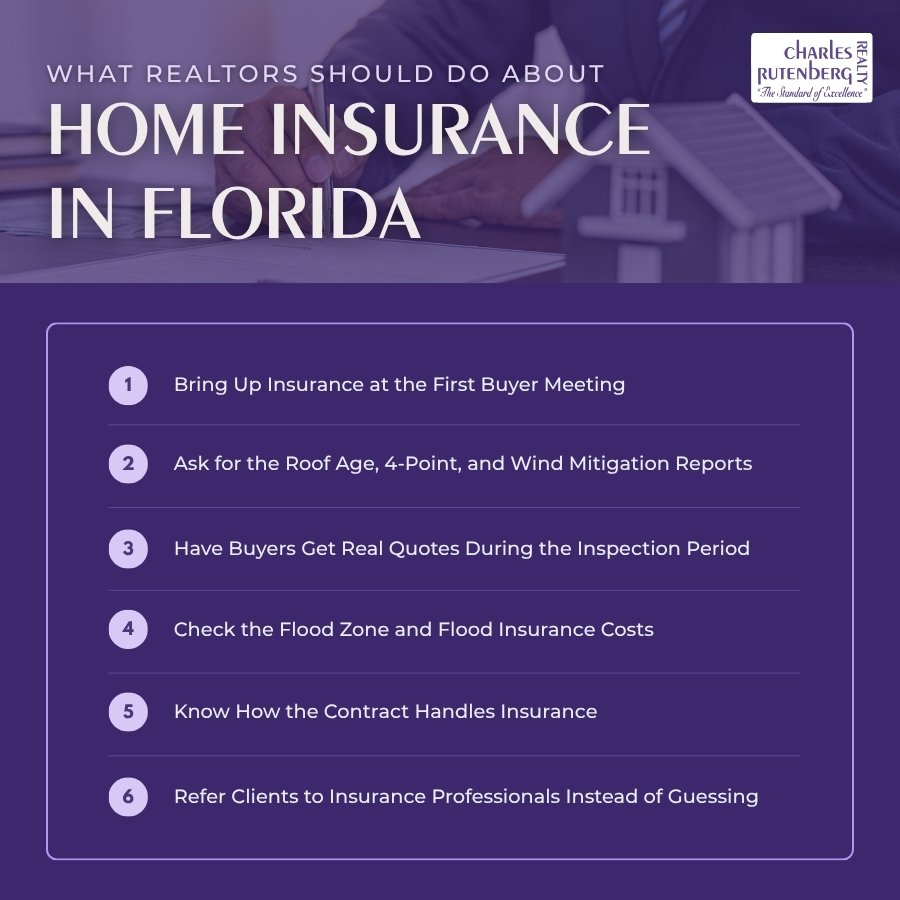
What Realtors Should Advise About Home Insurance in Florida
Remember, we’re not in the business of advising on insurance. But here are some ideas for creating a smooth process for your clients.
Bring Up Insurance at the First Buyer Meeting
At your first meeting with your buyer, discuss home insurance, just like you would financing. This will help set expectations and start the conversation early. Your buyer can then research and start getting numbers that make sense for their budget.
Ask the Seller for the Roof Age, 4-Point, and Wind Mitigation Reports
If you’re representing a buyer, ask the listing agent about the roof age and whether they have a 4-point inspection or wind mitigation report. These reports can help determine insurability as well as help with getting a more accurate quote.
Have Buyers Get Real Quotes During the Inspection Period
The inspection period is still when your buyer has the contractual right to back out or negotiate. So it’s a good time to follow up and make sure they’ve contacted an insurance agent and received quotes. They need an actual quote rather than a ballpark, so they aren’t surprised by the cost later in the process.
Check the Flood Zone and Flood Insurance Costs
Check to see if the home is located in a flood zone. If it is, have your buyer follow up with an insurance agent about additional costs for flood insurance. Adding that in can really impact the affordability of the home.
Know How Your Contract Handles Insurance
It’s a good idea to know what your purchase and sale contract says about insurance and insurability. Also know what rights your buyer would have if they can’t obtain reasonably priced insurance. This could be considered legal advice. If you’re unsure of the answer or the situation is more complicated, it may be a good idea to follow up with your broker.
Refer Clients to Insurance Professionals Instead of Guessing
The last thing any Realtor® wants to do is give clients the wrong information. Leave quotes, coverage, and eligibility questions to insurance professionals. It’s what they’re licensed to do.
When making an offer, our Clearwater agents typically ask prospective buyers to find out:
- How old is the roof?
- What flood zone is the home in?
- How many insurance claims have been made on the home?
- Does the home have any wind mitigation features?
These are also important questions that licensed insurance professionals will ask to determine a home’s insurability. So don’t be afraid to refer clients to an insurance professional you trust.
How Sellers Can Use Insurance to Their Advantage
Buyers in our area are very conscious of a home’s insurability. It’s one of the first things they’ll ask about. Listing agents can turn insurance from a hurdle into a selling point. There are things sellers can do to make their home more attractive to buyers (and their insurance carriers), like:
- Schedule a 4-point inspection and wind mitigation inspection before putting their home on the market. That means clear answers when buyers ask about insurability.
- Gather any permits for work done on the roof and include them with other maintenance records when selling
- Highlight any hurricane-resistant features the home may have, like a newer roof, shutters, impact windows, etc.
These hurricane-resistant features can help lower a potential buyer’s insurance premiums. Emphasize the money they could be saving by buying your client’s home. For more info on prepping a Florida home for sale, read our guide, Selling a Home in Florida: A Realtor’s Practical Guide.
Florida Condo Insurance Considerations
The association carries a master insurance policy, which covers the building and common or shared structures. Condo owners also need to maintain their own insurance (an HO-6 policy) to cover the interior of their unit and personal liability. Be aware that many buyers mistakenly believe a condo’s master policy offers more coverage than it actually does. Educate yours on what the association’s policy does (and doesn’t) cover and what they’ll still need coverage for.
Florida condo owners and associations may also want to be aware of Florida Senate Bill 4-D. It created Florida Statute 553.899, a milestone inspection program for condominium and cooperative buildings three or more habitable stories in height. The bill also requires structural integrity reserve studies for the same buildings. For budgets adopted on or after December 31, 2024, unit owners can no longer vote to waive or reduce those reserves.
Both of these could affect the overall financial health of a condo association and cause an increase in HOA fees. That’s something potential buyers may take into consideration when shopping for a condo. These requirements have been amended several times. Do your due diligence on a particular building and research the most up-to-date requirements before making any assumptions about its current standing.
What This Means for Pinellas County Buyers and Sellers
Pinellas County is one of Florida’s most densely populated counties. It includes the popular city of Clearwater and barrier island communities known for their white-sand beaches. Many homes here sit in (or close to) a flood zone. All of this makes the county (especially beach areas) susceptible to hurricanes and high water. Sinkholes are a factor too, since Pinellas County borders Florida’s most notorious sinkhole-claim region. It’s no wonder, then, that Pinellas County also sees premiums toward the higher end of the greater Tampa Bay area, according to Florida’s insurance regulator.
A spokesperson for the Office of Insurance Regulation addressed Hurricanes Helene and Milton. They said the storms did not cause widespread, significant rate increases to be filed by Florida’s private insurers in 2024. Still, these back-to-back hurricanes did emphasize the importance of understanding one’s coverage, particularly when it comes to flood insurance.
Our Clearwater agents have noticed buyers taking more interest in a home’s previous claims (specifically flooding), elevation certificates, and other documents. Sellers who can show their home was protected and stayed dry have an advantage.
Agents who serve beach and barrier island communities in particular should know this topic well. A working knowledge of elevation and flood zone requirements is essential in these areas. For more local context, see our guide Is Clearwater, Florida, a Good Place to Live? The Agent Guide.
Florida Home Insurance FAQs for Realtors
Can a Buyer Close Without Homeowners Insurance in Florida?
Cash buyers technically could close without insurance. But no buyer financing their purchase will be able to close without homeowners insurance. The lender will require proof of coverage (typically an insurance binder) in order to disburse loan funds. That said, it’s risky for a buyer to forgo homeowners insurance on any property in hurricane- and sinkhole-prone Florida.
How Old Can a Roof Be to Get Insurance in Florida?
There’s no age limit per se for getting homeowners insurance. Under the 15 years rule above, insurers can’t turn down a roof under 15 years old for its age alone. An older roof can stay insurable if an inspection shows five or more years of useful life left.
That said, every insurer may have its own standards for acceptable conditions and roofing materials. It’s always a good idea for the buyer to begin the quoting process early, particularly when purchasing a home with an older roof.
Who Pays for the 4-Point and Wind Mitigation Inspections?
This can be negotiated in the contract. Generally speaking, though, the person requesting the inspection (for rate quotes) is the one paying for it. So, if the seller orders the inspections completed before listing the home, they’d pay for those reports. If the buyer needs additional or up-to-date inspections in order to get rate quotes, the buyer would be the one paying for those.
Is Flood Insurance Required in Florida?
Flood insurance isn’t part of a standard homeowners insurance policy. While flood insurance isn’t required for all homeowners in Florida, it typically is required for financed properties in high-risk flood zones. That said, even if a home isn’t in a high-risk flood zone, it’s still a good idea to at least look into coverage. That’s particularly true in coastal areas like Pinellas County.
Build Your Clearwater Career With Charles Rutenberg Realty
When it comes to representing buyers and sellers, knowledge can set you apart from other agents. Knowing topics like Florida homeowners insurance, Citizens, wind mitigation discounts, flood zones, and roof ages gives you an edge with clients. That can mean more successful transactions and, ultimately, more referrals.
Just as the Florida Office of Insurance Regulation oversees the state’s insurance market, Charles Rutenberg Realty strives to set the standard for real estate excellence. Founded in 2000, the brokerage has a community of more than 2,100 agents. Our agents get a host of resources, training opportunities, and marketing and technology tools, plus 100% commission with low fees. At Charles Rutenberg Realty, the brokerage grows when our agents do.
Want to learn more about our agent-first philosophy? Schedule a call with our broker or apply to join our team at our Charles Rutenberg Realty Agent Application page. You can also call our Clearwater office at (727) 538-9200. And if you’re deciding to buy or deciding to sell a home, our agents would be happy to help too.
Important: This information doesn’t constitute insurance, legal, tax, financial or any other type of professional advice. Insurance rules and regulations are subject to frequent change. Please check for current requirements, and always advise clients to speak with an insurance professional about their coverage needs and options.