



One of the most common misconceptions about the home-buying process is the assumption from buyers that the purchase price is the only number that matters. The reality is that it is not. Helping clients understand costs associated with buying a home is one of the most valuable things you can do as their real estate agent.
The true cost of buying a home extends well beyond the listing price. There are transaction fees, closing costs, and ongoing expenses that every buyer needs to account for when determining what they can afford. When clients are caught off guard by these figures at closing, it creates stress and erodes trust. However, when they are informed from the beginning, the process runs significantly smoother.
In this guide, we break down the full cost of buying a home—from the initial transaction fees to the recurring expenses of homeownership. By the end, you will be equipped to walk your buyers through every cost and fee with confidence.

What Are All the Costs Associated with Buying a Home?
Purchasing a home is one of the largest financial commitments most people will ever make. That is exactly why buyers need a complete picture of what ownership actually costs, not just the purchase price.
A realistic budget accounts for upfront costs, prepaid expenses, closing costs, and the ongoing expenses that begin the moment the keys change hands. Property taxes, homeowners’ insurance, maintenance, and repairs all factor into the true cost of ownership. Buyers who plan for these figures are far better positioned than those who focus on the listing price alone.
When you take the time to walk clients through the full financial picture upfront, you protect the transaction and strengthen the relationship. Informed buyers make more confident decisions and tend to look at homes that are within their means.
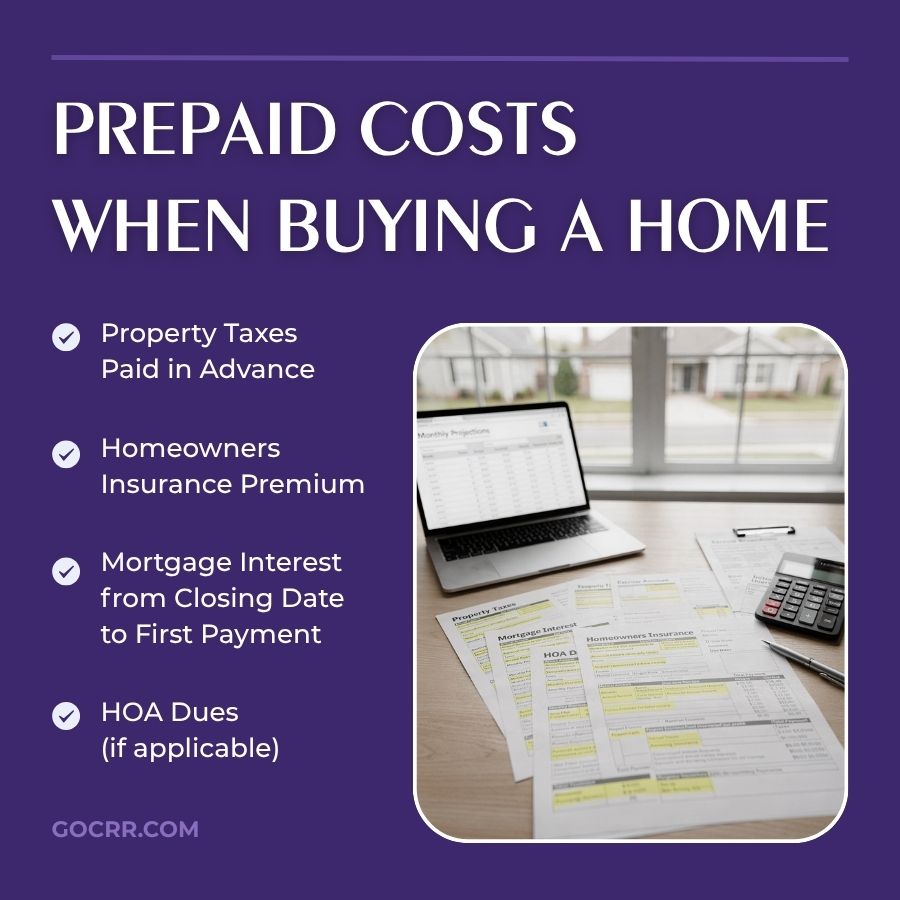
What Are Prepaid Costs When Buying a Home?
Property Taxes Paid in Advance
At closing, buyers typically prepay a portion of property taxes to fund their escrow account. The exact amount depends on where the closing falls within the tax cycle.
In Florida, property taxes are paid in arrears, meaning the seller credits the buyer for their share of the year. Meanwhile, the buyer prepays several months into escrow so the lender has sufficient funds to cover the next tax bill. Most lenders require two to three months of taxes upfront as a buffer.
Homeowners Insurance Premium
Before closing, lenders require proof that a homeowner’s insurance policy is in place and paid. Buyers typically pay the first full year’s premium upfront, either directly to the insurer or at closing. Additionally, they fund the escrow account with additional months to ensure they cover future renewals on time.
Florida homeowners’ insurance premiums tend to run significantly higher than the national average. For many buyers, this is one of the more substantial line items they encounter at closing, and one worth discussing early in the process.
Mortgage Interest From Closing Date to First Payment
Mortgage payments are made in arrears, meaning each payment covers the previous month’s interest. At closing, buyers pay prepaid interest to cover the gap between their closing date and the end of the month.
The timing of closing has a direct impact on this figure. A buyer who closes on the 25th owes just a few days of interest. One who closes on the 5th owes nearly a full month. Therefore, closing toward the end of the month can reduce the amount they’ll pay at closing. This is a small but useful consideration when helping buyers manage their upfront costs.
HOA Dues (if applicable)
In communities with a homeowners association (HOA), the association typically collects dues in advance at closing. This amount varies depending on the HOA’s billing cycle and the closing date’s position within it. Some associations also charge a one-time initiation or transfer fee on top of the prorated dues.
Buyers should request the HOA’s full fee schedule and ask about any pending special assessments well before closing. These figures can add up, and discovering them at the closing table can cause confusion and frustration.
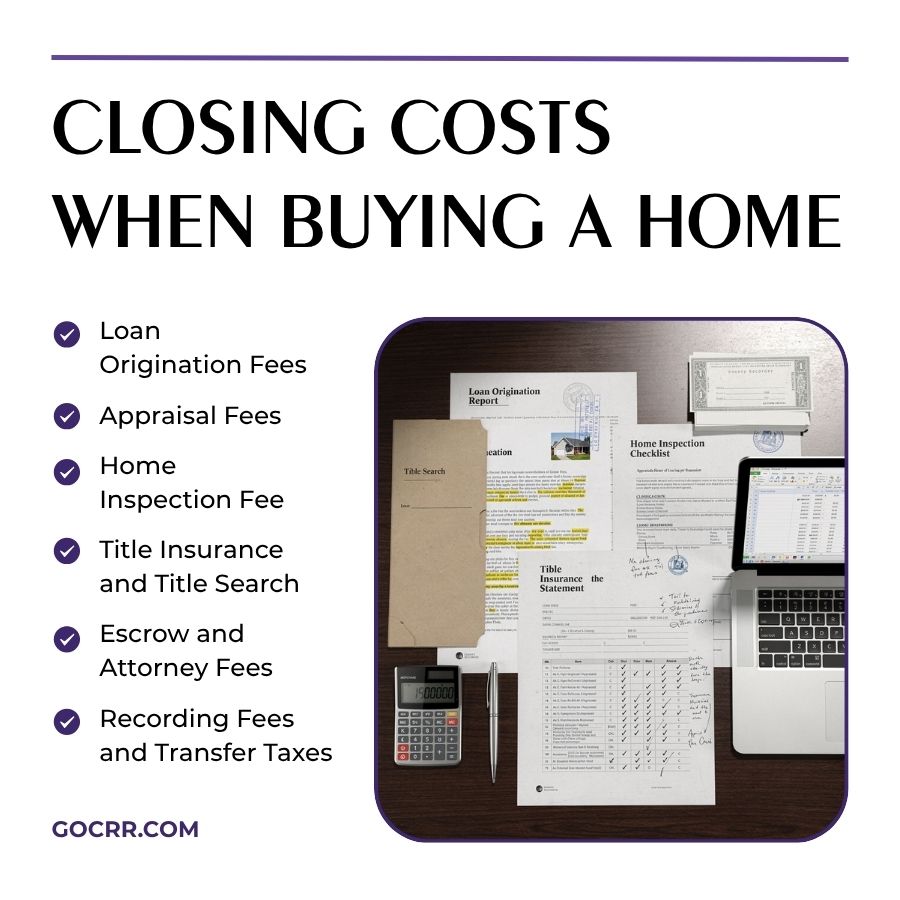
What Are Closing Costs When Buying a Home?
Loan Origination Fees
The origination fee is what a lender charges to process and underwrite a mortgage. It typically costs a percentage of the loan amount and covers. More specifically, this fee covers administrative work required to review the application, verify financials, and prepare the loan for closing.
Some lenders bundle these charges into a single origination fee. Others break them out as separate line items on the Loan Estimate. Either way, buyers should compare origination costs carefully across lenders before committing. The variation from one institution to the next can be significant.
Appraisal Fees
Before approving a mortgage, lenders require an independent appraisal to confirm the property’s market value. The buyer pays this fee, typically before closing. The fee covers the cost of a licensed appraiser inspecting the property and producing a formal valuation report.
The appraisal primarily protects the lender by ensuring the home’s actual value supports the loan amount. In a competitive market, this step needs to move quickly, as the loan cannot advance until the appraisal is complete.
Learn more about the appraisal process in our guide “Can Real Estate Brokers Do Appraisals?”
Home Inspection Fee
Lenders do not require home inspections, but it remains one of the most important steps buyers can take when committing to a purchase. A licensed inspector evaluates the property’s structure, systems, and major components, such as HVAC systems and water heaters. From the inspection, they provide a detailed report of their findings to the buyer.
In Florida, conditions such as humidity, storm exposure, and the age of certain systems can create property-specific concerns that a thorough inspection will surface. Working with an inspector who is familiar with local conditions adds significant value to this step.
Title Insurance and Title Search
A title search reviews public records to confirm that the seller holds clear legal ownership and to identify any outstanding liens, judgments, or encumbrances on the property. Title insurance protects against claims that surface after closing from issues the search did not uncover.
There are two policies to be aware of. First, the lender’s policy is typically required and protects the lender’s interest in the transaction. In comparison, the owner’s policy protects the buyer directly and is worth having. In Florida, responsibility for paying title insurance costs varies by county and may be negotiable. This is a detail buyers should clarify before sitting down at the closing table.
Escrow and Attorney Fees
Escrow and attorney fees cover the cost of the neutral third party who manages the closing process. Title companies typically handle closings in Florida. However, buyers have the right to retain their own real estate attorney if they prefer.
The escrow or closing fee compensates the closing agent for coordinating the transfer of funds, managing communication between parties, and ensuring proper documentation of the transaction. The cost varies based on the purchase price and the company handling the closing.
Recording Fees and Transfer Taxes
Once a sale finalizes, the deed and mortgage documents must be recorded with the county. However, the country clerk sets the recording feeds and covers the cost of entering those documents into the public record.
The Florida transfer tax is known as the documentary stamp tax. They apply to the deed based on the purchase price and to the mortgage note based on the loan amount. In Clearwater specifically, the documentary stamp tax rate for a property sale is 0.70% of the sale price.
These costs are generally predictable and calculated in advance. However, exact figures may vary depending on the county and the specifics of the transaction.
What Other Costs Are Associated with Buying a Home?
Moving Costs
Moving costs vary widely depending on distance, the volume of belongings, and the level of service a buyer selects. A local move handled by a professional company is considerably less expensive than a long-distance relocation. Helping buyers think through these costs early prevents them from being caught off guard when it’s time to move.
Furniture and Appliances
A previously owner-occupied home may transfer with appliances included, but that is not always the case. Moreover, new construction frequently excludes refrigerators, washers, and dryers, leaving buyers to source those independently after closing.
Furniture is another consideration that buyers often underestimate. Those moving from a smaller space into a larger home frequently find that their existing pieces do not fill the new square footage.
Immediate Repairs or Upgrades
Even a home that passed inspection with a clean report may have items a buyer wants to address before moving in. Fresh paint, updated fixtures, new flooring, and landscaping work are common priorities for buyers who want the space to feel like home from day one.
Additionally, it’s worth evaluating the condition of the air conditioning system, roof, and any hurricane-related features when moving into a Florida property. Replacing or upgrading those systems after move-in can be extremely disruptive and often more expensive. It is best to address them beforehand.
Utility Setup Fees
Setting up utilities such as electric, water, gas, and internet often involves deposits or activation fees. This is especially common for buyers who are new to the area or do not have an existing account history with local providers. Buyers should contact providers in advance to understand deposit requirements and anticipated monthly costs before the first bill arrives.
Maintenance and Emergency Fund
Homeownership brings ongoing expenses that renters never encounter directly. Lawn care, pest control, HVAC servicing, and routine upkeep accumulate steadily across the course of a year. Beyond scheduled maintenance, unexpected repairs can arise without warning.
Most financial advisors recommend setting aside roughly 1-4% of a home’s purchase price annually for maintenance. In Florida, where climate conditions and storm exposure add wear on certain systems, that figure can run higher for some properties. Buyers who plan for this from the start are in a far stronger position than those who do not.
Property Taxes and Mortgage Insurance
While Florida has no state income tax, property taxes are a real and recurring cost that buyers need to plan for. Tax rates vary by county, and a property’s assessed value can change after a sale. This is particularly true if the previous owner benefited from the Save Our Homes exemption cap. Ultimately, this limits annual assessment increases for primary residences.
Another recurring cost to plan for is private mortgage insurance (PMI). This insurance is mandatory when a buyer’s down payment is less than 20% on a conventional loan. The coverage protects the lender rather than the buyer and adds a monthly cost to the mortgage payment. The cost remains until the loan-to-value ratio reaches the threshold where removal is permitted.
How to Negotiate the Best Price When Buying a Home
Use inspection results to negotiate repairs or credits.
A home inspection gives buyers an opportunity to revisit the terms of their offer. When inspectors uncover significant issues, buyers can negotiate with the seller for repairs or financial credits. In most cases, sellers offer credits rather than completing the work themselves. Those credits apply toward the cost of repairs and reduce the final purchase price accordingly.
Compare multiple loan estimates before choosing a lender.
Shopping for a mortgage is just as important as shopping for a property. Each lender comes with its own origination fees, interest rates, and loan terms. Advising clients to speak with multiple lenders before committing to one can lead to better terms and lower overall costs.
Understand market conditions before making an offer.
A home’s perceived value shifts depending on current market conditions. In a seller’s market, buyers may need to offer above the asking price to be competitive. Before touring properties, make sure your clients understand where the market stands. That context allows them to approach offers with realistic expectations and a clear strategy.
Request the seller to cover closing costs.
In certain situations, particularly in a buyer’s market or when a seller is motivated to close quickly, there is room to negotiate seller-paid closing costs. For buyers experiencing upfront expenses, this conversation with the listing agent is worth having.
If you’re on the other side of the transaction and working with a seller, make sure to read our guide “Tips for Selling a Home.”
Assist more homebuyers while keeping 100% of your commission with Charles Rutenberg Realty.
Guiding buyers through a full financial picture is one of the most valuable things you can do as their agent. When clients feel informed and prepared at every stage of the process, they are more confident in their decisions. And, more importantly, they are more likely to refer you when the transaction is complete.
At Charles Rutenberg Realty, we support our agents with the tools and resources they need to serve clients at a high level. And with our 100% commission model, you keep more of what you earn on every transaction. No brokerage splits—ever.
That means more income to reinvest in your business and more capacity to help buyers find their homes in Clearwater, Florida. If you are ready to take the next step, schedule a call with our broker. We’ll discuss what a future at Charles Rutenberg Realty can look like for you.