



Florida remains one of the most sought-after relocation destinations in the country, drawing both domestic movers and international buyers. The reasons are familiar: warm weather year-round, world-class beaches, abundant entertainment, and an outdoor lifestyle. The numbers reflect that appeal. Officials project an annual population growth of 1.28% in what is already the third-most populous state in the country.
For real estate agents working in Florida, understanding the local market is only part of the job. Understanding the lifestyle is what allows you to match clients not just with a property, but with a neighborhood where they will thrive. That distinction is often what separates a good agent from a great one.
This guide covers whether Florida is a good place to live, weighing the advantages against the realistic considerations. We will also discuss the cost of living and what daily life in Florida actually looks like. By the end, you will have the talking points you need to answer questions from clients considering a move to the Sunshine State.

Is Florida a Good State to Live In? How to Sell the Lifestyle
Ultimately, Florida attracts a wide range of buyers who appreciate its warm year-round climate, thriving economy, and diverse coastal living. However, that doesn’t make it an appropriate fit for everyone. Hot, humid summers and the realities of hurricane season are genuine considerations that deserve honest discussion. This is particularly true for out-of-state buyers, who may not have firsthand experience living with those realities.
Being prepared to speak knowledgeably about life in Florida gives buyers the context they need to move forward with confidence. These topics include cost of living, the job market, weather patterns, healthcare access, and the overall quality of life. Matching a client to the right region of Florida, rather than simply the right property, is what creates lasting satisfaction. More importantly, that match shapes their entire experience of the move.
Where Is Florida?
Florida is a peninsula on the southeastern edge of the United States. The Atlantic Ocean borders it to the east and the Gulf of Mexico to the west. That geography creates the coastal neighborhoods and beaches that the state is famous for. It also places it in an ideal position for warm weather year-round.
The location also offers practical advantages for travel. Florida residents are within close reach of major domestic and international destinations, including direct flight access to Caribbean islands and Latin America. For buyers who travel frequently, that proximity is a quality-of-life consideration worth highlighting.
What Is Florida Famous For?
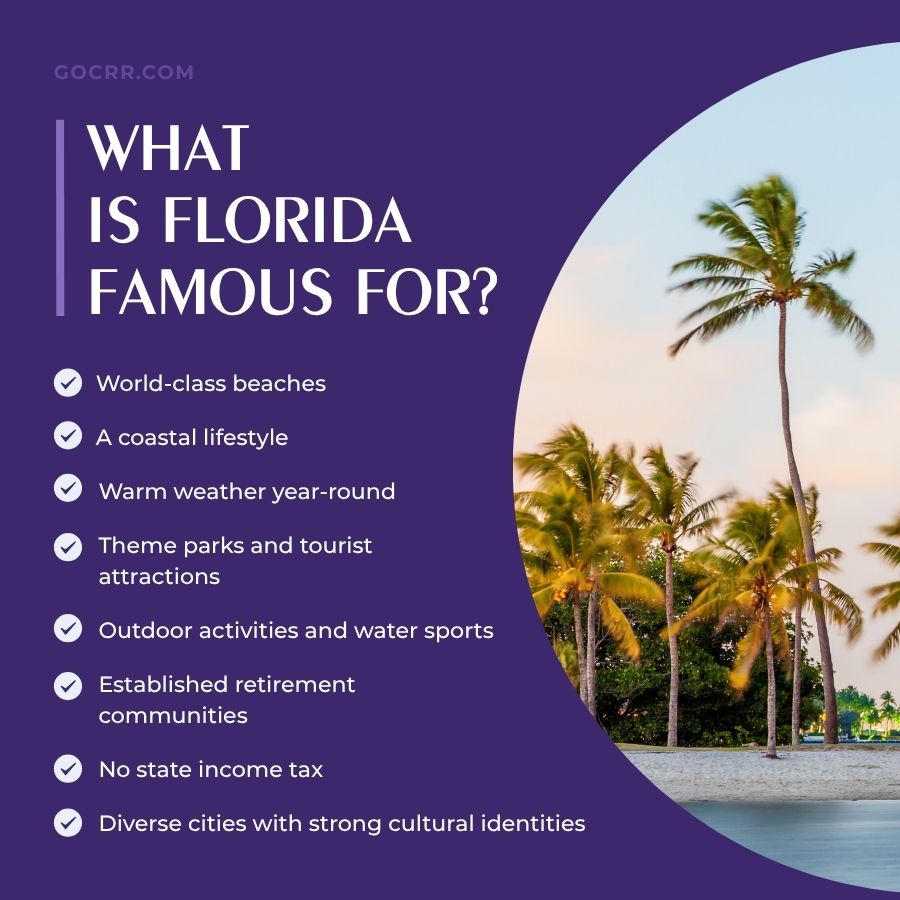
When people picture Florida, certain features tend to come to mind immediately:
- World-class beaches
- A coastal lifestyle
- Warm weather year-round
- Theme parks and tourist attractions
- Outdoor activities and water sports
- Established retirement communities
- No state income tax
- Diverse cities with strong cultural identities
Florida’s appeal extends across a wide range of buyers and life stages. Moreover, the state offers lifestyle options suitable for both individuals drawn to the energy of a thriving metro area or a slower pace of coastal living.
What Is It Like to Live in Florida?
Florida’s appeal starts with how naturally daily life moves outdoors. Homeowners use porches and patios year-round, and evening walks become part of daily routines as the afternoon heat eases. Weekends tend to gravitate toward the water, which is rarely more than a short drive away.
The climate shapes the rhythm of the year. Summers run hot and humid, with afternoon storms that build and pass through with predictable regularity. Winters stay mild, which is the very quality that draws so many people from northern states. That same mild winter brings seasonal crowds, with snowbirds and tourists filling roads and restaurants from January through April. After this period, the pace settles again.
The state itself does not feel uniform from region to region, an important point to make to prospective residents. North Florida carries a slower, more traditional pace closer in character to Georgia. Central Florida blends suburban growth with the energy of the theme park corridor. Meanwhile, South Florida moves faster, shaped by international culture and coastal density.
Within each region, neighborhoods vary just as widely. For example, you will often find established retiree communities and newer suburbs built around recent construction. For a closer look at the communities in Florida, review our guide “Is Clearwater, Florida, a Good Place to Live?”
What Is the Average Cost of Living in Florida?
Florida’s overall cost of living runs approximately 3% below the national average. However, that figure can vary depending on location. Miami and Fort Lauderdale tend to run 20% to 25% above the national average. Meanwhile, cities such as Orlando, Tampa, and Punta Gorda come in 6% to 9% below.
For a clearer picture of monthly costs across the state, average figures include:
- Home Price: $377,578
- Rent: $2,395
- Insurance: $237
- Property Taxes: 0.82% of home value
- Utilities: $252
- Groceries: $1,148
- Transportation: $1,281 (for a family of two working adults and two children)
The figures give buyers a useful starting point, though local variations within each city and neighborhood can still be significant. For a deeper look at the cost of moving to Florida, review our guide “Costs Associated with Buying a Home.”
What Are the Advantages of Living in Florida?
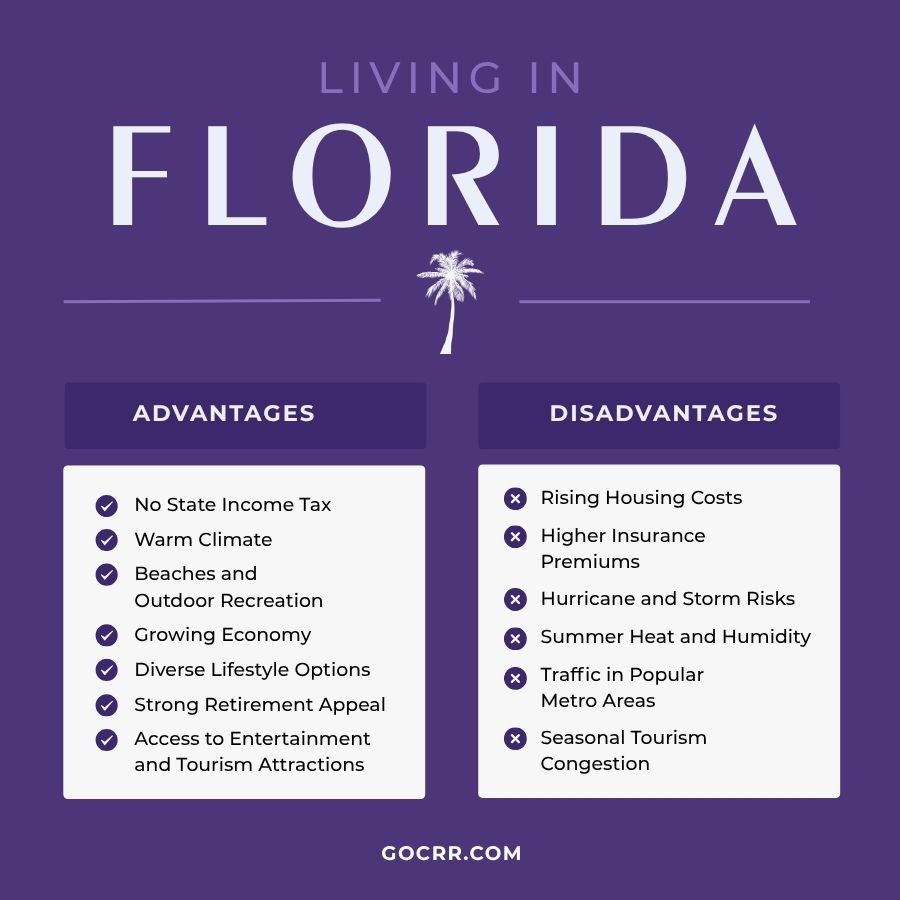
No State Income Tax
One of Florida’s most significant advantages is the absence of state income tax. Salaries, capital gains, pensions, and Social Security income are all exempt from state taxation. For retirees in particular, this means keeping more of their income and having greater control over their finances in retirement.
Warm Climate
Florida’s climate is one of its defining features, particularly its mild winters, which draw many people south. With an average year-round temperature of around 72°F, outdoor living is accessible in a way few other states can match. For buyers who want sunshine and outdoor activity to be part of their daily routine, Florida consistently delivers.
Beaches and Outdoor Recreation
Florida’s natural beauty is genuinely difficult to overstate. World-class beaches line the Gulf Coast, and the Everglades offer a landscape unlike anywhere else in the country. Meanwhile, small island communities like Key West sit just off the coast. For residents, this means outdoor experiences become part of an ordinary week rather than something reserved for vacations.
Growing Economy
Florida’s economy continues to grow, supported by a stable job market. Over the past year, personal income in the state increased by 6.7%. Real estate, finance, insurance, professional business services, and tourism remain the primary drivers behind that growth. For families or young professionals relocating to Florida for career considerations, opportunities are abundant.
Diverse Lifestyle Options
Florida offers a genuinely diverse range of lifestyle options. Buyers can choose from city living in established metropolitan areas or coastal living near beaches. Meanwhile, suburban communities offer more space and a quieter pace. That range is particularly valuable for buyers drawn to what Florida offers but are unsure which community fits them best.
Strong Retirement Appeal
Florida has long been known as a retirement destination, and the reasons are consistent. These include no state income tax, warm weather, and established communities specifically for retirees. That combination lets people who spend decades working in colder climates settle into a slower, more comfortable pace of life.
Access to Entertainment and Tourism Attractions
Florida’s entertainment and tourism offerings are not reserved for visitors. Many residents hold annual passes to Walt Disney World or Universal Studios, treating them as part of their regular calendar.
Beyond the theme parks, destinations like Everglades National Park and Dry Tortugas National Park offer genuine getaways without leaving the state. Florida is the kind of place where there is consistently something to do close to home.
To understand the range of activities Florida offers, review our guides “Things to Do in St. Petersburg” and “What to Do in Clearwater.”
What Are the Disadvantages of Living in Florida?
Rising Housing Costs
While Florida’s overall cost of living remains below the national average, housing costs have been rising and represent the largest monthly expense. Combined with increasing grocery and utility prices, the financial pressure many residents feel is real. However, this is not unique to Florida, as many households nationwide are navigating similar trends.
Helping buyers realistically assess what they can afford before committing to a home is one of your most valuable services. It protects them from financial strain after the move. Ultimately, this foundation supports a purchase they can sustain over the long term.
Higher Insurance Premiums
Insurance premiums in Florida run considerably higher than in most other states. This applies to both homeowners and auto coverage. Florida residents pay 62% more for auto insurance, while homeowners’ insurance increased by 75% between 2021 and 2025. These figures represent the real, ongoing cost of living in Florida. Buyers should factor them into their monthly budget from the outset to ensure their move is financially sustainable long-term.
Hurricane and Storm Risks
Florida’s geography makes it prone to hurricanes and flooding from intense storms. Ultimately, this is one of the primary reasons homeowners’ insurance costs as much as it does. While many communities are well prepared for natural disasters, the risk itself does not disappear. This is a conversation worth having directly with buyers, particularly those considering a property in a designated flood zone.
If you are working with a homeowner whose property has flooded, our guide “How to Sell a House That Has Flooded” may help.
Summer Heat and Humidity
Florida’s weather is a major part of its appeal, but summer conditions deserve an honest mention. More specifically, temperatures regularly reach the high 80s and mid-90s. At the same time, humidity levels can make those temperatures feel significantly more intense than the thermometer suggests.
For buyers who are hesitant about committing to that for several months of the year, a seasonal residence may be worth exploring. That arrangement allows them to enjoy Florida’s mild winters and overall lifestyle. Meanwhile, they do not have to commit to exposure to summer heat.
Traffic in Popular Metro Areas
Florida’s popularity as both a tourist destination and a second-home market means increased traffic is a reality in many metro areas. Sharing information about available public transportation gives buyers an alternative to navigating crowded streets. Moreover, setting that expectation early helps new residents adjust to the area’s rhythm more comfortably.
Seasonal Tourism Congestion
Florida welcomes more than 143 million visitors each year. Domestic and international travelers visit cities like Orlando, Tampa, Miami, and Key West for the state’s entertainment and beaches. During peak tourism season, which runs from mid-December through mid-April, residents can experience noticeable congestion at restaurants and beaches.
That said, knowing where the local favorites are helps buyers to enjoy the lifestyle without competing with seasonal crowds.
Is Florida a Great Place to Live?
Florida offers genuine lifestyle advantages for people relocating from out of state. The climate supports an outdoor routine that holds up for most of the year. Meanwhile, the absence of state income tax makes a measurable difference for many households over time.
However, these benefits come with real trade-offs. Summer humidity and storm season can be a significant adjustment for new residents. Additionally, insurance and property costs vary considerably depending on location.
Ultimately, whether Florida feels like the right fit often comes down to which part of the state someone chooses. They must consider how the area’s pace and climate align with what they are looking for. And as a buyer’s agent, your role is to help them understand whether an area fits their lifestyle and financial goals.
Help homebuyers call Florida home while keeping 100% of your commission with Charles Rutenberg Realty.
When helping buyers relocate to Florida, agents carry the responsibility of providing a complete picture. This includes discussing factors such as the cost of living, weather patterns, regional differences, and the advantages and trade-offs associated with the decision. Florida is a great place to live for buyers whose priorities align with what the state offers. The talking points covered here give you the foundation to help those buyers who move forward with confidence.
At Charles Rutenberg Realty, every transaction you close in Florida means keeping 100% of your commission. Alongside that commission model, we equip our agents with local resources and administrative support. We’ve designed this process to keep you prepared for any client conversation and transaction.
If you are ready to see what that could mean for your business, schedule a call with our broker today.