

In many traditional careers, a college degree is required just to enter the industry. Real estate, however, offers a more flexible path with different educational requirements. For many aspiring real estate professionals, this is an advantage. They can begin their careers without the time and financial commitment of a four-year university.
Instead of a traditional degree, individuals who want to become real estate agents or property managers must complete a state-approved licensing course. This education prepares you for the licensing exam and provides the knowledge needed to legally facilitate real estate transactions.
However, many still wonder if there are any additional licensing or education requirements before entering the field. In this guide, we will explain whether a college degree is required to become a Realtor. We will also touch on which degrees—while not mandatory—may provide a competitive advantage in the real estate industry.
What Degree Do You Need to Be a Realtor?
When considering a career in real estate, one of the first questions many people ask is whether a specific degree is required. In most states, the answer is no—real estate degrees are not necessary to become a Realtor. The same standard applies to Florida Realtors.
Rather than following a traditional academic path, aspiring Realtors complete state-approved pre-licensing courses and pass a licensing exam. The overall path to licensure is relatively straightforward.
For a detailed timeline, you can review our guide, “How Do You Become a Realtor.”
Do You Need a Degree to Be a Realtor?
No, a college degree is not required to become a Realtor. In most cases, a high school diploma or GED is sufficient to qualify for the licensing process.
However, success in real estate depends on more than meeting the basic requirements. Key skills such as sales, negotiation, communication, and marketing are critical to building successful real estate businesses. An entrepreneurial mindset is equally important, as real estate professionals are responsible for managing and growing their own client base.
While some agents may have formal education in these areas, it is not necessary. Agents can develop these skills through self-education, including online courses, industry events, and hands-on experience. Taking the initiative to continuously improve your skillset will position you for long-term success in the industry.
What Degree Do You Need to Become a Realtor?
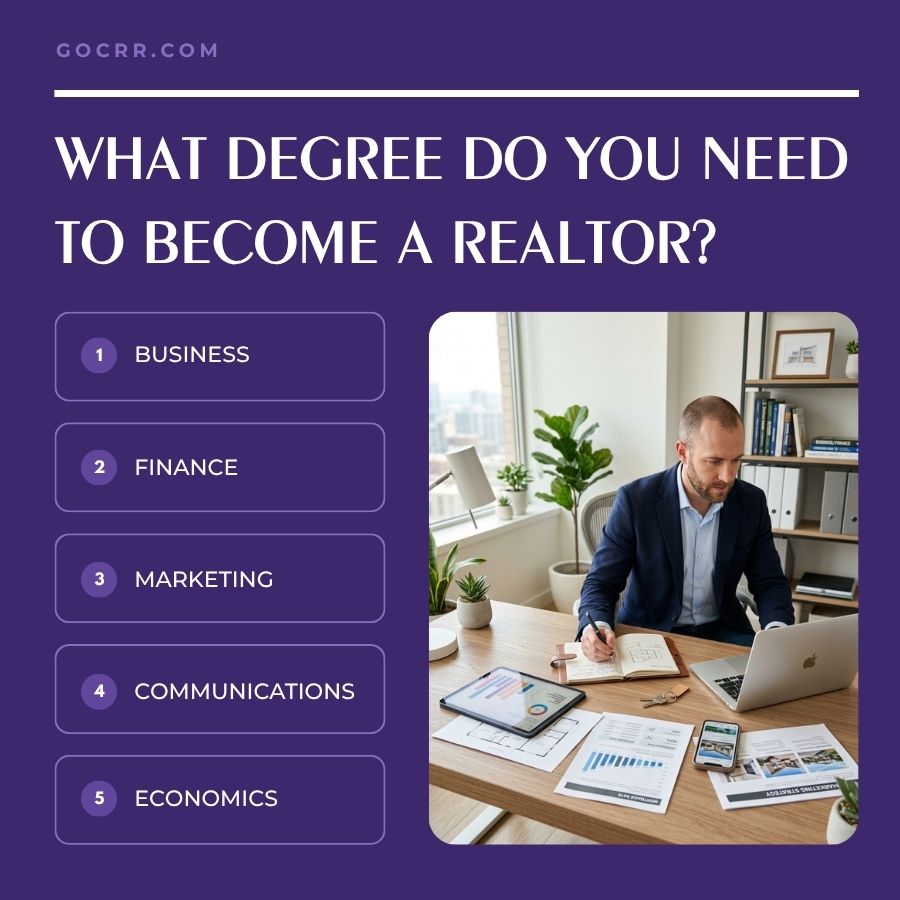
While a college degree is not required, certain fields of study can help build and manage a successful real estate business.
Business
A background in business can help develop essential skills such as financial planning, operations management, budgeting, and cash flow oversight. These skills are directly applicable in real estate. For example, agents are responsible for managing client relationships, tracking their financial performance, and reinvesting earnings to grow their business.
Understanding business fundamentals can provide a more comprehensive view of what it takes to succeed as a Realtor. However, formal knowledge is not required to enter the industry. In fact, many agents develop these skills through experience and self-directed learning.
Finance
The homebuying process is closely tied to financial considerations. A background in finance can help you better understand mortgage structures, investment strategies, and overall affordability. This knowledge allows you to communicate more effectively with both buyers and real estate investors.
With this education, you can identify strong investment opportunities and guide clients toward properties that align with their financial goals. You can also provide more informed recommendations based on a client’s mortgage options and financial position.
This level of financial insight can set you apart, positioning you as a knowledgeable advisor rather than simply a transaction facilitator.
Marketing
A significant part of building a successful real estate business involves marketing yourself and standing out in a competitive landscape. In Florida, this means standing out from the more than 220,000 real estate agents in the area. This is why understanding both traditional and digital marketing strategies can help you generate leads more consistently. It also allows you to position your services in front of the right audience.
Knowing how to capture attention, communicate your value, and nurture leads into clients is a valuable skill for any Realtor. While a formal education in marketing provides a strong foundation, you can develop these skills through self-study and experience.
For a deeper look at effective strategies, review our guide “Marketing for Realtors.”
Communications
Realtors who can build strong relationships, communicate with confidence, and negotiate effectively have a distinct advantage in the industry. These skills extend beyond client interactions, however. Strong communication also supports your marketing and personal brand. When you clearly present your value and services, you are more likely to attract qualified leads who convert into clients.
Equally important is how you manage relationships throughout the transaction. Real estate deals can become emotional, especially when challenges arise. The ability to handle conflict, set expectations, and guide conversations professionally can make the difference between a deal falling apart and successfully closing.
Economics
The real estate market is constantly changing, making it essential for agents to understand broader economic trends. A background in economics can help you identify market shifts, guide clients on financial conditions, and price listings more accurately.
Moreover, the ability to interpret factors such as interest rates, inflation, and employment trends allows you to anticipate market changes and adjust your strategy accordingly. This insight can also strengthen your understanding of local market dynamics.
For agents looking to specialize in specific neighborhoods, this knowledge is particularly valuable. You position yourself as a local real estate market expert who can provide clients with informed, data-driven guidance.
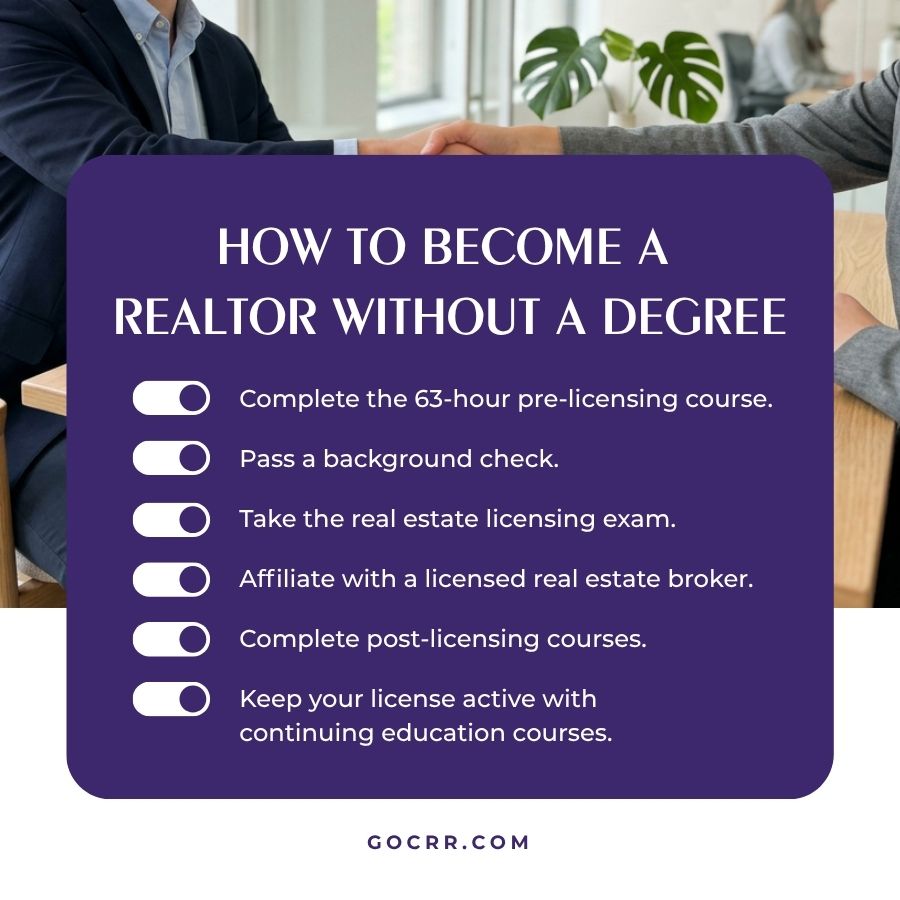
How to Become a Realtor Without a Degree
Complete the 63-hour pre-licensing course.
To become a Realtor in Florida, you must complete a 63-hour pre-licensing course from a state-approved real estate school. You may take this course either online or in person, depending on your preference and timeline.
The curriculum covers essential topics such as real estate law, transaction procedures, and core industry fundamentals. It is designed to provide the knowledge required to operate professionally and prepare you to pass the state licensing exam.
Pass a background check.
Some states require aspiring real estate agents to complete a background check as part of the licensing process. Before taking the state exam, applicants in Florida must submit fingerprints through an approved Livescan provider.
This step includes a fee for both the fingerprinting service and background screening. For a detailed breakdown of all costs involved in the process, review our guide, “How Much Does It Cost to Get a Realtor License?”
Take the real estate licensing exam.
After submitting your background check and license application, you can schedule your real estate exam through Pearson VUE at an approved testing center. The exam is administered electronically and consists of 100 multiple-choice questions.
Upon completion, you will receive your results immediately. If necessary, you may retake the test as many times as needed until you achieve a passing score. However, you must wait 24 hours after a failed attempt and repay the exam fee.
Affiliate with a licensed real estate broker.
Once you pass your licensing exam, the next step is to affiliate with a licensed real estate broker. This involves evaluating brokerages to find one that offers the support you need as you start your career.
After you choose a broker, they will activate your license with the state. You may now legally represent buyers and sellers and begin facilitating real estate transactions.
For guidance on selecting the right brokerage, review our guide, “Real Estate Recruiting: What Today’s New Agents Must Know.”
Complete post-licensing courses.
In Florida, all newly licensed agents must complete a 45-hour post-licensing course within the first two years of licensure. Failing to complete this requirement will result in the license becoming inactive.
Keep your license active with continuing education courses.
Every two years, all licensed real estate agents must complete a 14-hour continuing education course to renew their license. This coursework keeps agents informed of important industry updates. The curriculum includes key takeaways for changes in real estate laws, regulations, and best practices.
As you move through the early stages of your career, there are multiple opportunities to continue learning and developing your skills. For this reason, a traditional college degree is not required to succeed in real estate. With the right training and commitment, you can build a successful career in an industry with unlimited income potential.
Become a Realtor without a degree and start your career at Charles Rutenberg Realty.
If you are considering a career in real estate but are concerned about not having a college degree, there is no need to worry. A degree is not required to become a Realtor. With a high school diploma and completion of the licensing process, you can begin your career.
Once you have passed the licensing exam, the next step is to choose a broker who can support your growth. That is where Charles Rutenberg Realty can make a difference.
We provide professional training, ongoing support, and valuable educational resources to help you build a strong foundation. In addition, our 100% commission model allows agents to keep more of what they earn compared to traditional brokerages. That means you have greater flexibility to reinvest in your business and continue learning.
Schedule a call with our broker to learn how Charles Rutenberg Realty can help you launch and grow your real estate career.