


Staging a home is one of the key factors influencing how quickly it sells. More specifically, the first element that captures a potential buyer’s attention is the listing photography. High-quality, visually appealing images can significantly increase interest in your client’s property. As a result, the property can sell more quickly and, in some cases, at a higher price.
To elevate listing photos, however, it’s essential to stage the environment. As a real estate professional, recommending staging before a property goes on the market can be a strategic step to attract more qualified buyers and reduce time on the market.
To better understand the importance of staging, in this guide, we outline practical home-staging tips you can confidently share with your clients. By applying these strategies, you position yourself as a knowledgeable advisor, strengthen your professional reputation, and create opportunities for successful, efficient transactions.
Staging Ideas for Selling a Home That Bring Better Offers
Staging a home is widely recognized as one of the most effective strategies for selling a property quickly. However, only 28% listing agents consistently incorporate it into their marketing approach. When a home is thoughtfully prepared to showcase its space and highlight its most desirable features, it becomes easier for potential buyers to envision themselves living there.
Understanding that staging involves more than simply rearranging furniture is foundational. It requires a strategic presentation that enhances the property’s appeal and supports a stronger first impression. That is why we are sharing practical home staging ideas and recommendations you can share with clients who plan to prepare their home for the market.
What Is Home Staging?
Home staging is the intentional arrangement of furniture, decor, and visual elements to present a property in its best possible light while it is on the market. The goal is to optimize the space and highlight the home’s strongest features. Most importantly, staging also creates an environment that appeals to the broadest range of buyers.
Many sellers choose to work with professional staging services. This may include renting furniture and decor, updating finishes, or repainting walls in neutral colors for a modern appearance. Other sellers prefer to stage the home themselves by removing personal items, improving lighting, completing minor repairs, and performing a thorough deep cleaning.
Ultimately, effective staging helps a home feel purposeful and inviting. It allows buyers to clearly understand how each room functions and to envision themselves living in the space. When expectations are set visually from the start, buyers can make confident decisions and focus on properties that truly meet their needs.
Tips for House Staging
Arrange furniture to maximize space flow.
An important principle of home staging is arranging furniture to enhance the natural flow of the room. Furniture placement should make the space feel open, functional, and easy to navigate. When a room feels comfortable and well-organized, buyers are more likely to view it as both spacious and practical.
In some situations, this may require removing oversized furniture that overwhelms a smaller room. For example, replacing a large sectional with a pair of armchairs or a smaller sofa can immediately improve the room’s feel. Make sure to keep walkways clear, avoid blocking windows, and resist the urge to push furniture against every wall.
The objective is to create a room that feels bright, balanced, and purposeful. When a seller meets these objectives, buyers quickly realize how the space can support their daily living.
Focus on the most impactful rooms.
Some sellers choose to focus their staging efforts on specific areas of the room rather than staging every room. This can be a practical and cost-effective approach, especially when resources are limited. The rooms that typically carry the greatest influence on buyer decisions include the kitchen, living room, primary bedroom, bathrooms, and the entryway.
Prioritizing these high-impact spaces helps ensure the home meets buyer expectations from the moment they walk through the door. It also allows your clients to allocate their time and budget strategically. When they focus on the areas most likely to shape a buyer’s first impression, they increase the overall perception of value.
Add small lifestyle touches, but keep it minimal.
Effective home staging centers on presenting a space that feels clean, open, and well-maintained. At the same time, thoughtful lifestyle details can create a positive emotional connection with potential buyers without introducing unnecessary clutter.
Simple touches can make the home feel warm and inviting while still remaining polished and ready for buyers. Many homeowners begin by placing a bowl of fresh fruit on the kitchen counter or arranging neatly folded white towels in the bathroom. Additional lifestyle touches include adding a tasteful throw blanket to the sofa or placing potted plants strategically.
These subtle enhancements help buyers envision everyday life in the space. And, as a result, these visions can strengthen buyer interest and support a more favorable showing experience.
Remove personal items and unique decor.
The ultimate goal of home staging is to help buyers clearly envision themselves living in the property. An effective way to support this vision is to remove personal items, such as family photos, and distinctive or overly bold decor.
Creating a neutral, uncluttered environment allows buyers to view the home as a blank canvas—one they can easily imagine customizing to fit their own lifestyle. Buyers should not walk into a room feeling like guests in someone else’s space. Instead, they must see the property as a place they can make their own.
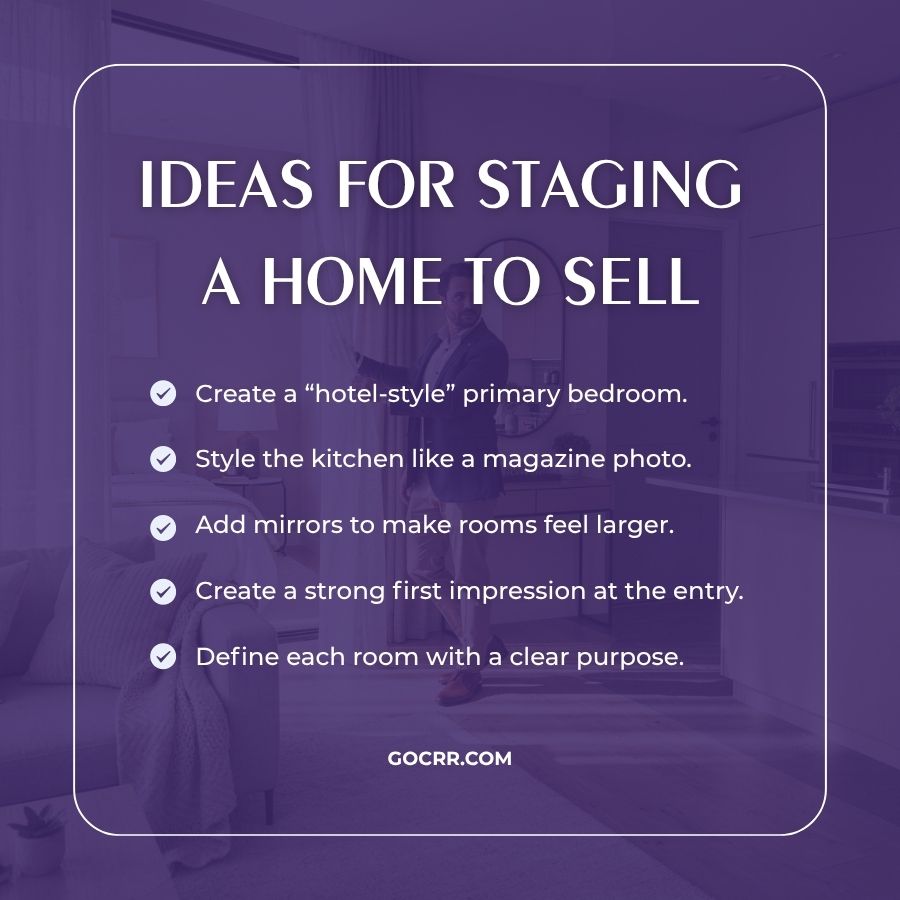
Ideas for Staging a Home to Sell
Create a “hotel-style” primary bedroom.
Consider the experience of walking into a well-prepared hotel room. The space feels clean, spacious, and thoughtfully designed, while remaining comfortable and inviting. That same standard is what an effectively staged primary bedroom should deliver.
In a properly staged bedroom, personal items are removed from dressers and walls to create a calm, uncluttered environment. Neutral tones are typically used for wall colors and bedding to appeal to a broad range of buyers. Matching nightstand lamps can create balance and symmetry. Additionally, a few carefully selected decorative pillows and a coordinating throw blanket add warmth and a subtle sense of comfort.
Style the kitchen like a magazine photo.
When flipping through home magazines, it is easy to notice how thoughtfully designed kitchens immediately capture attention. Clean surfaces, balanced decor, and intentional details create a polished and inviting space. While the kitchen is often considered the heart of the home, in a staged home, it should also serve as a functional backdrop that highlights its full potential.
One of the most effective ways to stage a kitchen is to keep countertops clear and limit visible items to a few purposeful accents. Encourage clients to prioritize a single focal point, such as a bowl of fruit or a neatly placed cutting board. This can make the space feel welcoming without creating visual clutter.
In kitchen staging, simplicity is a strategic advantage. An organized presentation allows buyers to focus on the space itself and imagine how they would use it in their daily routines.
Add mirrors to make rooms feel larger.
When working with a smaller or more compact space, strategically placing mirrors is a common staging technique. Mirrors help reflect natural light, making rooms feel brighter and visually larger. In return, this can significantly enhance a buyer’s first impression of the home.
While staging cannot change the physical structure of a property, it can thoughtfully use design elements to highlight strengths and improve perception. Leveraging simple tools like mirrors gives sellers an advantage. This provides them the opportunity to present the space in its most favorable light, maximizing visual appeal.
Create a strong first impression at the entry.
First impressions play a critical role when buyers arrive to tour a property, whether during a private showing or an open house. For that reason, sellers should place strong emphasis on curb appeal and the entryway’s presentation. These areas set the tone for the entire showing experience.
Simple improvements can create a meaningful impact. Applying a fresh coat of paint to the front door and placing two coordinated plants on either side immediately enhances the home’s appearance. Replacing worn doormats and ensuring exterior lighting is clean and functional helps the property feel well-maintained and inviting.
Inside, thoughtfully staging the foyer with tasteful furniture and minimal decor creates a smooth transition into the living space. A polished entryway signals care and attention to detail, qualities that buyers quickly recognize and appreciate.
Define each room with a clear purpose.
Every room in a home should have a clear, intentional purpose, and staging can help define that function. When buyers immediately understand how a space can be used, the property feels more practical, valuable, and move-in ready.
For example, buyers can use a spare bedroom as a home office, or an unused corner as a comfortable reading nook. These simple adjustments demonstrate the home’s versatility and highlight how each area can support a buyer’s unique needs.
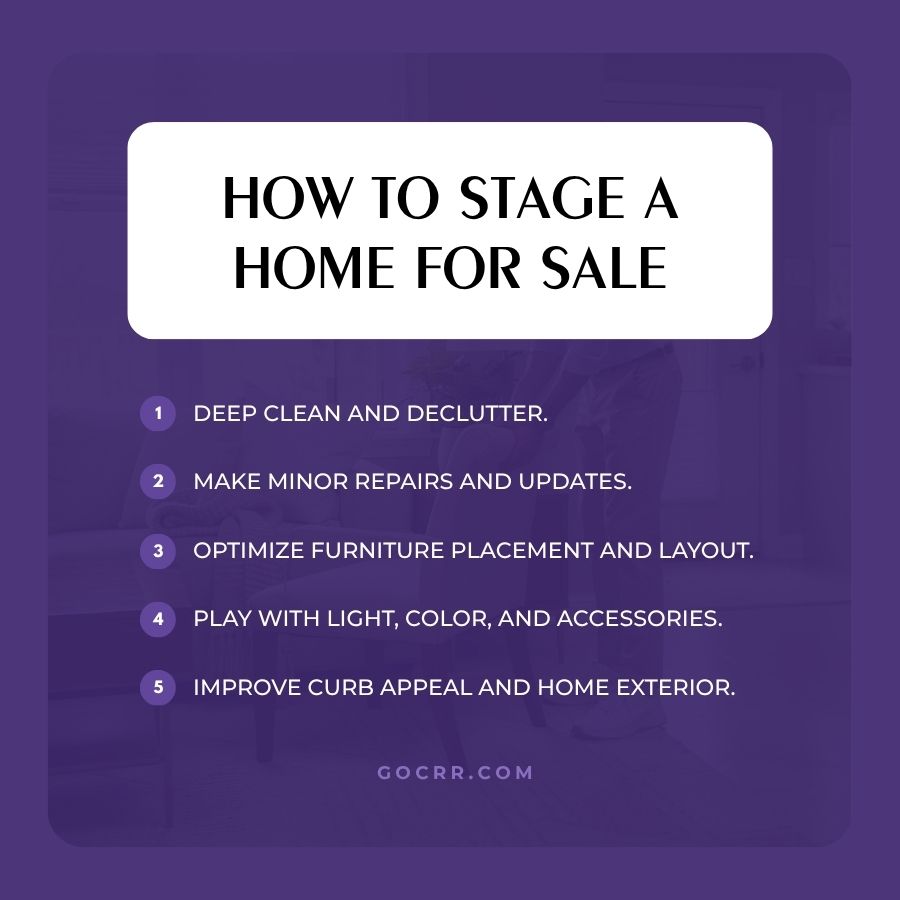
How to Stage a Home for Sale
Deep clean and declutter.
The first step in preparing a home for sale is conducting a thorough, top-to-bottom deep cleaning. This includes floors, windows, grout, baseboards, and the often-overlooked areas that accumulate dust and wear over time. A clean property immediately shows pride of ownership, which strongly resonates with potential buyers.
This process should also involve decluttering surfaces such as countertops, closets, shelves, and walls to create a greater sense of space. In many cases, it can be beneficial to recommend that clients rent a storage unit while their home is on the market. Removing excess belongings helps open up living areas and improves overall presentation. More specifically, it allows buyers to focus on the property itself rather than the items in it.
Make minor repairs and updates.
It’s important that clients address any minor repairs they have postponed before the property goes on the market. Examples may include tightening loose fixtures, fixing leaky faucets, lubricating squeaky doors, or repairing dents and marks on walls. While seemingly insignificant, these flaws can influence a buyer’s perception of the home’s overall condition.
It is equally important to ensure that all lighting is functional. Replacing burned-out light bulbs and using warm, consistent lighting throughout the property creates a welcoming atmosphere. These simple maintenance steps demonstrate attention to detail and reinforce the impression of a well-cared-for property.
Optimize furniture placement and layout.
Once the client has properly prepared the rooms, the next step is arranging the furniture to maximize space and functionality. This may involve removing or replacing certain pieces or repositioning furniture to create a more balanced layout and clear walking paths.
In many cases, a symmetrical arrangement is the most effective because it creates a sense of order and visual harmony. Additionally, avoid placing furniture in a way that blocks natural focal points, such as windows or fireplaces. Instead, furniture should complement and highlight these features to show the home’s strongest attributes.
Play with light, color, and accessories.
While the primary objective of staged homes is to declutter and create an open environment, thoughtful use of accessories, lighting, and color enhances the overall presentation. Maximizing natural light is a common strategy. Opening blinds, pulling back heavy drapes, and letting sunlight into the space can make rooms feel brighter and larger.
In addition, carefully selected neutral accents, such as decorative pillows or fresh flowers, introduce warmth and visual interest without overwhelming the room. Decor should remain simple and intentional. Subtle artwork, coordinated textiles, and soft throw blankets add comfort and style.
Improve curb appeal and home exterior.
Home staging extends beyond the interior of the property. The exterior presentation plays a critical role in shaping a buyer’s first impression. In fact, 68% of homebuyers view poor curb appeal as a deciding factor when evaluating a home.
Investing time in basic landscaping, improving the appearance of the front entry, and ensuring that outdoor lighting is clean and functional makes a meaningful difference. These details set a positive tone before buyers even step through the front door.
Is Home Staging Worth It?
Home staging offers clear advantages for both sellers and real estate professionals. A well-presented property commands a stronger market position, often leading to a faster sale and, in some cases, a higher final sale price.
In competitive markets, such as Clearwater, Florida, staged homes often stand out. When buyers feel confident in a property, they are more likely to move forward with an offer. In addition, staged homes tend to photograph more effectively, which can increase online visibility and generate greater interest from prospective buyers.
Moreover, staging is not a one-size-fits-all solution. Each property requires a tailored approach based on factors such as layout, condition, and occupancy. For this reason, many real estate professionals find value in establishing relationships with professional stagers. This partnership allows you to confidently recommend clients while increasing potential commission.
For additional strategies on exceeding client expectations and strengthening your business, review our guide, “How to Be a Successful Realtor.”
Increase your commission and sell homes faster in Clearwater, FL, with Charles Rutenberg Realty.
Working with sellers in Clearwater, Florida, involves more than hosting open houses, setting a listing price, and negotiating terms. It also requires providing strategic guidance on how to enhance a property’s perceived value. Staged homes consistently attract more buyer interest, often leading to faster transactions and more competitive offers. For listing agents, this translates into more efficient closings, satisfied clients, and a stronger reputation in the market.
When you partner with Charles Rutenberg Realty, you also retain 100% of your commission—with no traditional brokerage splits. This model allows you to benefit fully from your performance while leveraging the tools, resources, and training that support your success.
If you are ready to explore what a future could look like as a Realtor in Clearwater, schedule a call with our broker. We’ll walk you through how our support system can help you sell homes faster while keeping more of your earnings.