


Real estate offers exceptional income potential for professionals who help buyers and sellers navigate transactions. However, with more than three million licensed real estate agents nationwide—and nearly a quarter of them based in Florida alone—standing out and consistently finding clients can be a challenge.
The good news is that success doesn’t require reinventing the wheel. With the right marketing strategy, you can build a strong pipeline, expand your network, and close more deals. One of the most effective and time-tested methods is real estate cold calls. This direct outreach allows you to connect with potential buyers and sellers in real time and start meaningful conversations that lead to future business.
While cold calling is sometimes viewed as outdated, it continues to deliver results when done correctly. In this guide, we’re sharing effective cold calling scripts for real estate professionals. By the end, you’ll have practical tools to build a confident cold calling strategy that supports sustainable growth in your real estate business.

Real Estate Cold Calling Scripts Top Agents Actually Use
Real estate agents have no shortage of marketing options for generating leads and growing their businesses. Ultimately, however, long-term success comes from using multiple strategies together—and cold calling is one of the most effective.
Confidence comes with repetition, and one of the fastest ways to improve is by using a proven script. A clear structure removes hesitation and keeps the conversation with a potential buyer or seller focused and productive.
To help you break through the initial resistance, this guide explains what real estate cold calling really is and how to approach it. Additionally, we’ll share sample scripts that you can use right away. With the right preparation and mindset, cold calling becomes less intimidating and far more profitable.
What Is Cold Calling in Real Estate?
Cold calling in real estate is the process of proactively calling property owners to uncover motivation, build rapport, and create future listing opportunities. Rather than delivering a sales pitch, it’s about starting genuine conversations and building relationships. At its core, cold calling is simply proactive networking.
Agents typically focus on specific groups, such as homeowners in a targeted neighborhood, expired listings, For Sale By Owner (FSBO) properties, or investor-owned homes. These phone calls aren’t about pushing someone to sell. They’re about identifying interest and opening the door to a follow-up conversation when the timing is right.
The real objective is to build familiarity and trust. A successful cold call leads to a second call, a meeting, or an appointment—not an immediate listing agreement. Over time, those conversations turn into real relationships and signed clients.
When done correctly, cold calling is one of the most practical and cost-effective ways to expand your network. It’s a sustainable, successful method for staying top of mind with homeowners and creating consistent opportunities for future business.
Is Cold Calling Effective in Real Estate?
Yes, cold calling can be extremely effective in real estate. However, it’s essential to approach it with the right expectations. Cold calling is a numbers game. The more consistent you are, the more results you’ll see.
On average, cold calling converts at a 2-3% rate. That may sound low at first, but consider this: agents who make just 20 calls a day often convert 10-20% of those contacts into business over the course of a year. In fact, more than half of successful real estate agents still rank phone prospecting as their most effective lead generation strategy.
Unlike social media or digital marketing, cold calling puts you directly into a conversation. You’re not waiting for someone to scroll past your content. Instead, you’re creating real dialogue that gives you the opportunity to offer value, answer questions, and begin building trust.
There’s no shortcut here. Cold calling takes discipline and effort. But when done consistently, it creates momentum—and momentum creates opportunity.
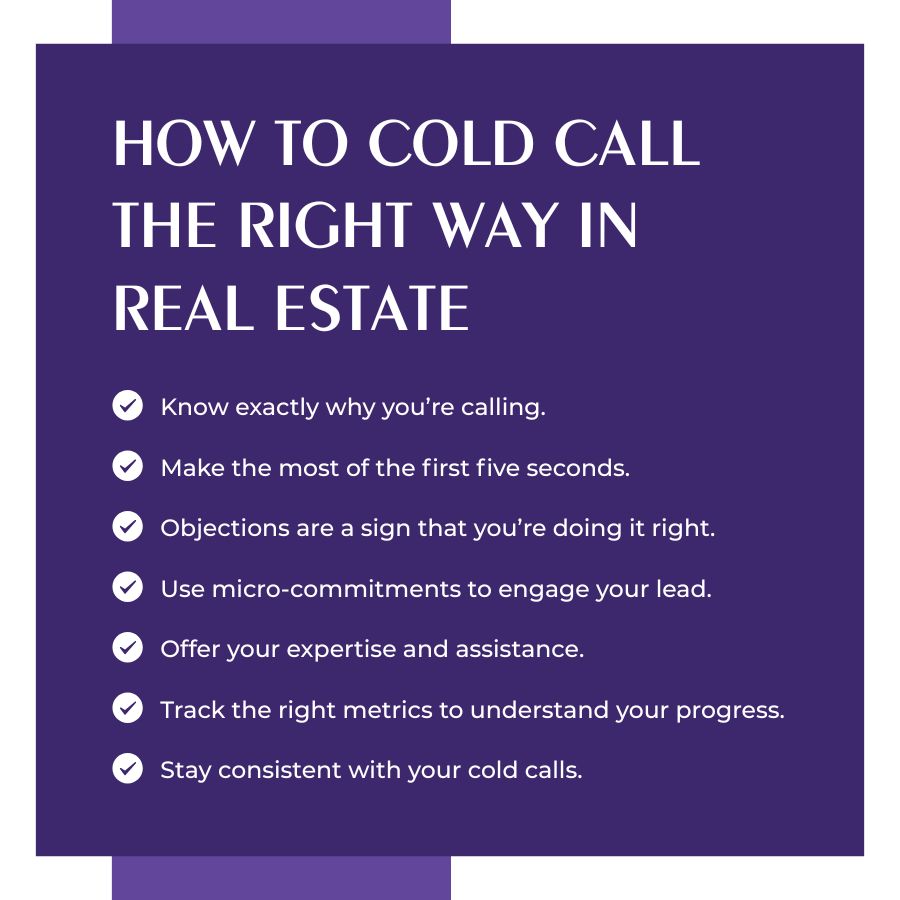
How to Cold Call the Right Way in Real Estate
Know exactly why you’re calling.
The key to a productive cold call is knowing why you’re calling before you ever dial the phone number. Calling with purpose immediately sets you apart from agents who are simply working through a list.
When you reach out to an expired listing or an FSBO, you already know the owner is interested in selling, but may be facing challenges. If you’re calling homeowners in a neighborhood where values have recently increased, be prepared to share relevant data. That context turns a cold call into a meaningful conversation.
If you can’t identify a clear reason for the call, don’t make it. Your time is far better spent speaking with property owners who show real potential to sell. Purpose-driven calling leads to stronger conversations, better follow-up, and more opportunities.
Make the most of the first five seconds.
The reality is that most people don’t enjoy receiving cold calls. That’s why the first five seconds determine whether the conversation continues—or ends immediately. Opening with, “Hi, my name is John, and I’m a real estate agent,” often triggers resistance and leads to a quick hang-up.
A stronger approach is to lead with confidence and relevance. Instead, try something like, “Hi [Name], did you end up selling the home on Oak Street?” This immediately provides context for the call and invites a genuine conversation rather than a sales response.
Remember, however, it’s not just the words you say in these first five seconds—it’s your tone. Speak clearly, calmly, and with authority. You want to sound like a professional who understands the local real estate market and has a reason for calling. When you project confidence and purpose from the start, people are far more likely to stay on the line and engage with you.
Objections are a sign that you’re doing it right.
When you start cold calling, objections can feel discouraging. However, they’re actually a sign you’re doing it right. Hearing, “We’re not interested,” isn’t a cue to end the call. It’s an opening to engage with curiosity.
Avoid arguing or trying to change their mind. Instead, acknowledge their response and ask a simple, thoughtful question about what’s driving it. This shifts the conversation from resistance to dialogue.
Let them know you’re not calling to pressure them into a decision today. Your role is to be a resource. Even if they’re not interested right now, staying informed about the local market and keeping in touch over time can be valuable. When you approach objections with professionalism and patience, you build trust, turning a cold call into a future opportunity.
Use micro-commitments to engage your lead.
Your goal with cold calling should not be to secure a listing immediately. This sets the bar unattainably high, causing frustration and demotivation. Successful real estate cold calls are built on micro-commitments, not instant listing agreements.
Instead of pushing for a listing appointment, guide the conversation toward a small, low-pressure next step. That might include offering a quick market update, sharing a comparative market analysis (CMA), or scheduling a brief informational meeting.
These small commitments create momentum. You get the opportunity to demonstrate your expertise to potential clients, while the homeowner can engage without feeling pressured. Over time, those small “yeses” build trust.
Offer your expertise and assistance.
When you cold call a potential seller, your role is that of a consultant—not a salesperson chasing listings. Your objective is to offer insight, perspective, and market knowledge that genuinely helps the homeowner.
Before you ever dial the phone, shift your mindset. You’re calling to see if there’s a way you can add value, not convince someone to sell their home. As we mentioned previously, real estate cold calling isn’t about closing on the first conversation. It’s about building relationships, earning trust, and expanding your network over time.
Track the right metrics to understand your progress.
As you start cold calling, tracking performance is essential. However, it’s not just about how many clients you land. It’s about measuring indicators that provide valuable insight into your strategy.
Focus on metrics like total calls made, real conversations held, and micro-commitments secured, such as appointments or follow-ups. These numbers reveal how effective your script truly is and where adjustments are needed.
For example, if you’re having plenty of conversations but booking few appointments, your script likely needs refinement. If call volume is low, the issue may be a lack of consistency or discipline. When you track the right data, cold calling becomes a repeatable, improvable system—not a guessing game.
Stay consistent with your cold calls.
The more cold calls you make, the better your results will be. Cold calling is a skill—one that improves with repetition, refinement, and consistency. Once you dial in a script that actually converts, momentum builds quickly, and your network begins to grow.
Top-producing agents make cold calls every day. They call at the same time, follow a proven script, and treat it like a non-negotiable part of their business. Ultimately, discipline is what separates success from frustration. Stay consistent, stay focused, and the results will come.

What to Say When Cold Calling for Real Estate
Before picking up the phone, make sure you have a strong, effective script ready. A clear structure gives you confidence and keeps conversations focused and productive.
Below are sample real estate cold calling scripts for different situations you’ll encounter. Use them as a starting point, then refine and personalize them to match your style and the market you’re working in.
Expired Listing Cold Calling Script
Expired listings represent homeowners who are still motivated; they just didn’t get the outcome they wanted initially. Your role isn’t to critique the past—it’s to understand what happened and present a clear, more effective path forward.
Real Estate Agent: Hi [Name], this is [Your Name]. I’m calling about the home on [Street], did it sell, or is it still available?
Homeowner: No, it didn’t sell.
Real Estate Agent: Got it. When the home didn’t sell, what do you think was the biggest reason?
Homeowner: (Responds)
Real Estate Agent: That makes sense. Where were you planning on moving once it sold?
Homeowner: (Responds)
Real Estate Agent: Most expired homes don’t fail because of the house itself. Usually, it’s a pricing or marketing issue. Would it be helpful to meet for about 15 minutes so I can show you what I’d do differently, and then you can decide if it makes sense to move forward?
FSBO Cold Calling Script
When cold calling FSBOs, your role is to educate, not pressure. Focus on demonstrating the resources, strategy, and results you bring to the table. Explain how professional representation can ultimately put more money in their pocket.
Real Estate Agent: Hi [Name], I saw your home on [Street] is for sale by owner. Are you the one handling the sale?
Homeowner: Yes.
Real Estate Agent: Great. Out of curiosity, what’s your plan if the home doesn’t sell in the next 30 days?
Homeowner: (Responds)
Real Estate Agent: Got it. Where are you moving once the home sells?
Homeowner: (Responds)
Real Estate Agent: How quickly are you hoping to make that move?
Homeowner: (Responds)
Real Estate Agent: That makes sense. If I find a suitable buyer at your price, would you be open to a conversation at that point?
Homeowner: (Responds)
Real Estate Agent: Why don’t we do this—let’s meet briefly so I can share what buyers are responding to right now, and you can decide if it’s useful. Fair enough?
Investor-Owned Property Cold Calling Script
Reaching out to investors is an effective way to keep them informed about rising property values and favorable market conditions. It positions you as a market resource while highlighting an opportunity to sell at a strong return.
Real Estate Agent: Hi [Name], this is [Name]. Quick question—are you still holding the property on [Street], or has it already sold?
Investor: We still own it.
Real Estate Agent: Got it. Are you planning to hold long-term, or would you consider selling if the numbers made sense?
Investor: (Responds)
Real Estate Agent: What kind of return are you targeting on that property?
Investor: (Responds)
Real Estate Agent: Are you actively buying more in this area or trimming the portfolio right now?
Investor: (Responds)
Real Estate Agent: Values in this area have shifted recently. Would it be helpful to do a quick value review so you can see what today’s numbers actually look like?
Neighborhood with Rising Values Cold Calling Script
Targeting neighborhoods with recent sales or rising home values creates strong listing opportunities. Many homeowners don’t realize how much their property is worth—and the right information can prompt them to act sooner than expected.
Real Estate Agent: Hi [Name], this is [Your Name]. I’m calling because a few homes just sold near you on [Nearby Street], and I wanted to share what that means for your home.
Homeowner: Okay.
Real Estate Agent: Homes in your area increased in value recently. Have you thought about selling in the next 6 to 12 months?
Homeowner: (Responds)
Real Estate Agent: If you did decide to move, where would you go next?
Homeowner: (Responds)
Real Estate Agent: What would need to happen for selling to make sense for you?
Homeowner: (Responds)
Real Estate Agent: Many homeowners don’t realize how much leverage they have right now. Would it be helpful if I stopped by and showed you what buyers are actually paying—not just online estimates?
Close more deals with Charles Rutenberg Realty while keeping 100% of your commission.
Running a real estate business takes real effort, and cold calling is a sustainable, effective approach that pays off with consistency and dedication. Even with the right practices, however, many real estate agencies and brokerages discount that effort through commission splits that reduce earnings. That’s where Charles Rutenberg Realty is different.
We operate on a 100% commission model. Our agents keep what they earn, minus flat administrative and transaction fees. No percentage splits. Ever.
Keeping your commission doesn’t mean giving up support. We invest in our agents with professional training, advanced tools, and proven resources—such as these cold-calling scripts—to help you build a stronger, more profitable business.
Are you curious what your income could look like at Charles Rutenberg Realty? Use our Commission Calculator to see how much you could be earning.
For more strategies on generating listings and growing your business, explore our guides below: