

There is a side of real estate that many people overlook when considering a career in it. They see agents answering calls, managing paperwork, and guiding clients through transactions. However, the work that often drives those opportunities is less visible. More specifically, it is the relationships built through consistent, deliberate networking that fuel a sustainable real estate business.
Real estate is a relationship-driven industry where visibility, trust, and referrals carry more weight than most advertising or marketing campaigns. Agents who prioritize building genuine connections and expanding their network tend to find more consistent, long-term success in their careers.
In this guide, we cover what real estate networking is, why it functions as the backbone of the business, and how to approach it. We also outline who to prioritize connecting with and how to build relationships with intention. By the end, you will have a clear, structured framework for growing your network and your business alongside it.
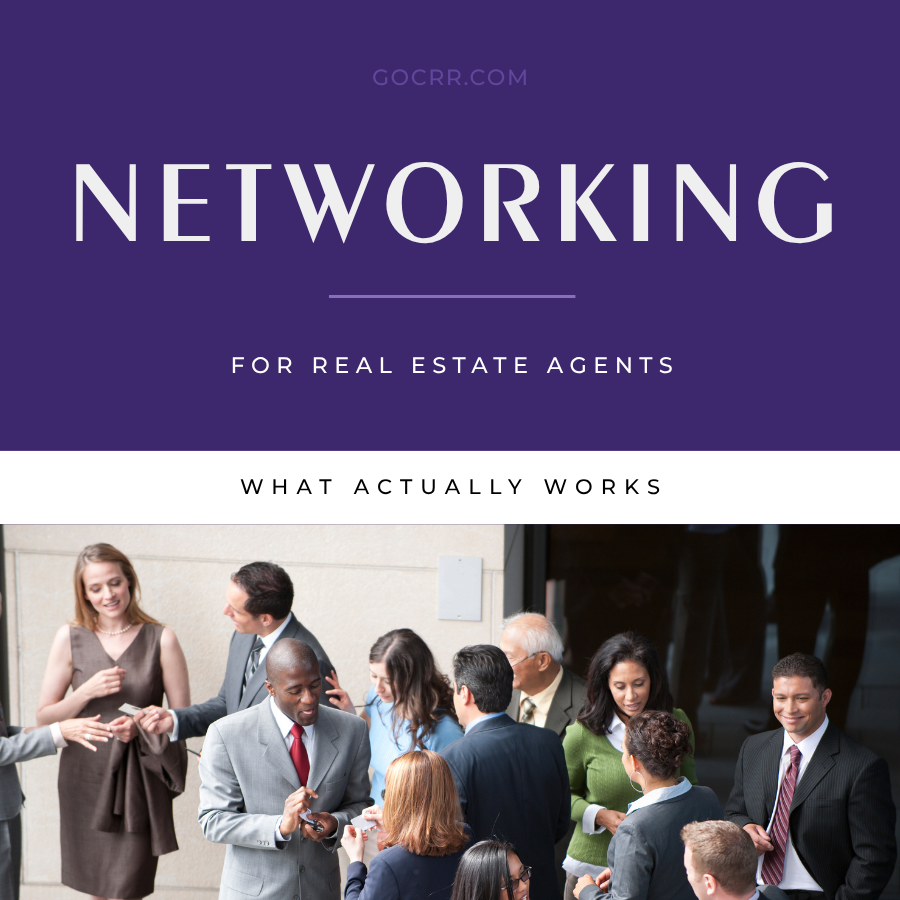
Networking for Real Estate Agents: What Actually Works
Networking is the single most important habit a real estate professional can build. Unlike most business strategies, its value compounds over time. Every person you meet and maintain a relationship with increases the likelihood of a future transaction. This can happen directly, or through a referral someone in your network sends your way.
However, effective networking isn’t simply about meeting as many people as possible. It’s about building consistent systems and showing up with intention on a regular basis. Agents who dedicate as little as 15 minutes per week to deliberate networking can build stronger pipelines, generate more referrals, and, ultimately, increase their income. More specifically, the agents who treat networking as a daily habit rather than an occasional effort tend to see the most significant results.
What Is Networking in Real Estate?
Real estate networking is the ongoing process of building and maintaining relationships that generate referrals, listings, and buyer leads over time. These relationships can be formal—structured around professional associations and industry events—or informal, built through community involvement and everyday social interaction.
In either case, the foundation is trust. When you build trust and maintain it consistently, the relationships convert into paying clients and referrals over time.
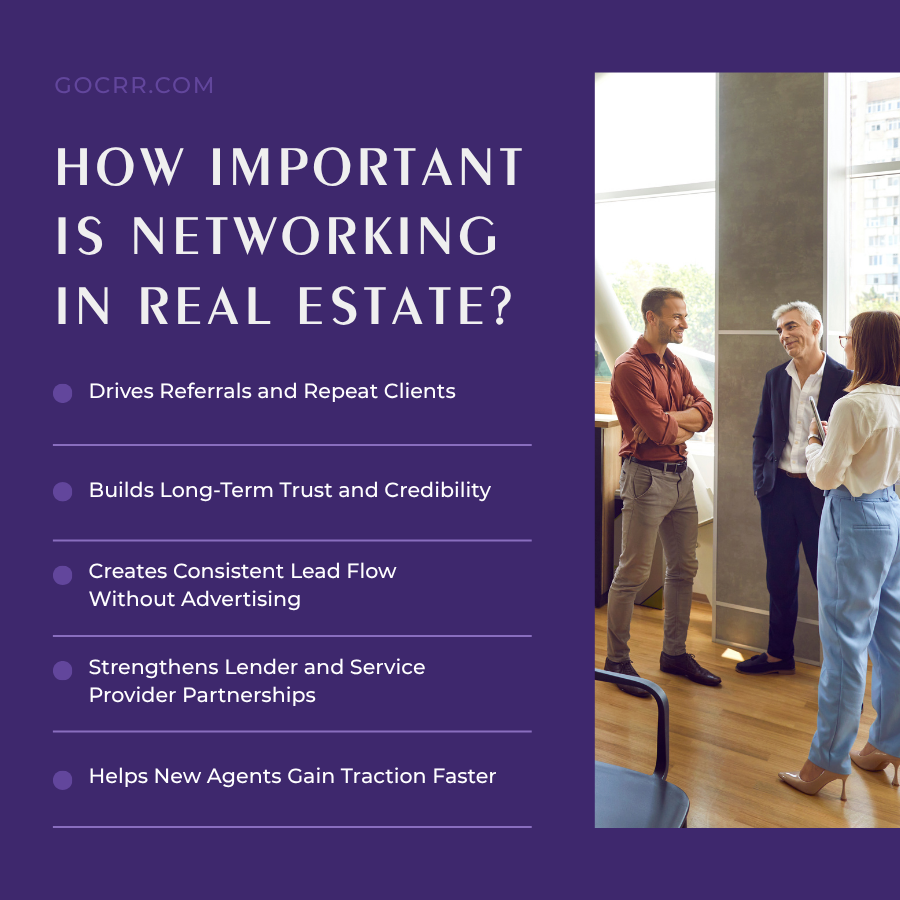
How Important Is Networking in Real Estate?
Drives Referrals and Repeat Clients
A strong network is the most reliable source of consistent business in the real estate industry. According to industry research, 82% of all transactions originate from referrals. Therefore, the majority of clients come from recommendations rather than advertising or marketing.
Ultimately, the agents with the largest, most well-maintained networks are the ones who benefit from that referral pipeline. To learn more about how to earn referrals, review our guide “How to Use Client Testimonials.”
Builds Long-Term Trust and Credibility
Real estate professionals build trust and credibility through consistent, genuine relationship-building over time. To invest in those relationships, stay in contact, provide value, and show up reliably. Eventually, those conversations and leads will convert into business.
As we mentioned previously, the business could be either those directly within your network or individuals referred to you by those in your network. Nevertheless, the time spent building trust and nurturing those connections pays dividends that compound well beyond the initial effort.
Creates Consistent Lead Flow Without Advertising
A well-developed network creates a consistent flow of leads without requiring a single dollar spent on advertising. Word of mouth and personal introductions, when cultivated over time, can sustain and grow your business more reliably than ads.
In reality, the agents who build the strongest referral networks often find that their pipeline fills itself. That means freeing up both time and resources that would otherwise go toward paid lead generation.
Strengthens Lender and Service Provider Partnerships
Building relationships with other industry professionals—mortgage lenders, title companies, inspectors, and real estate service providers—is just as important as networking with potential clients.
A strong professional network allows you to manage transactions more efficiently and resolve issues more quickly. More specifically, when the right professionals are already in your corner, the experience you deliver becomes noticeably smoother from contract to closing.
Helps New Agents Gain Traction Faster
The moment you receive your real estate license, start networking immediately and consistently. Let everyone you meet know what you do, regardless of whether they are planning to move anytime soon. The people who are not in the market today are often the ones who refer you to someone who is.
This is also the right time to establish daily and weekly habits that will sustain your business long–term. For practical strategies to start building your pipeline, review our guide “Real Estate Lead Generation Ideas.”
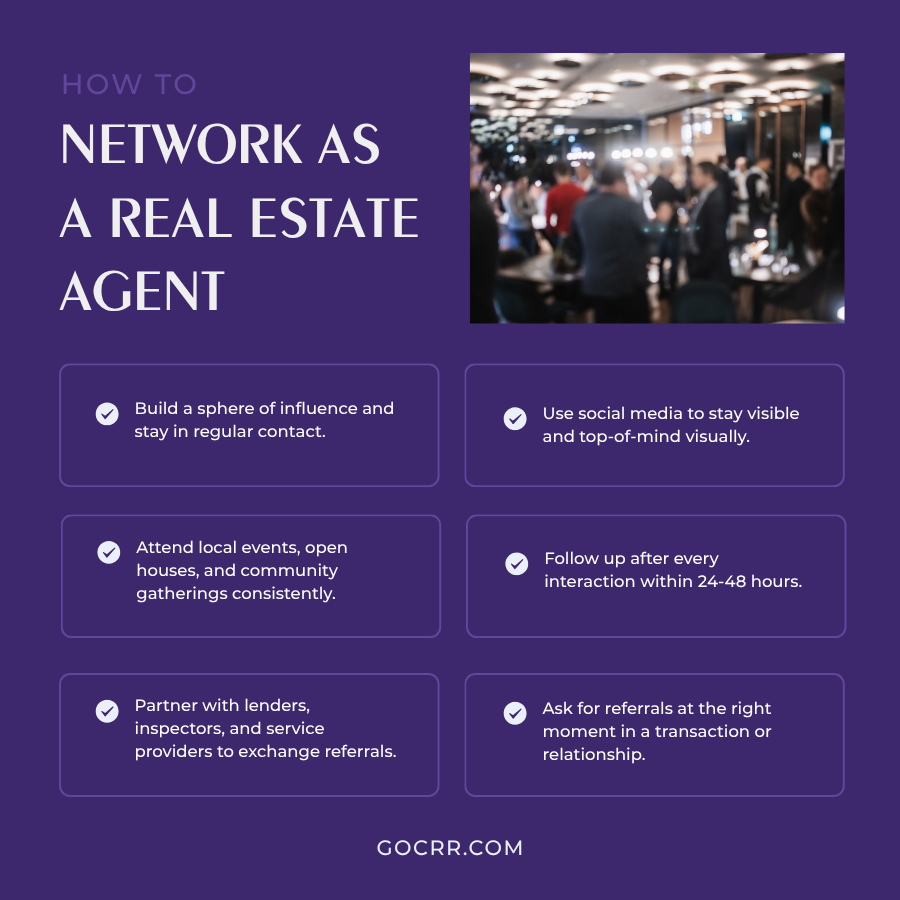
How to Network as a Real Estate Agent
Build a sphere of influence and stay in regular contact.
The relationships you have already built with friends, former colleagues, and family make up what the industry calls your sphere of influence. These people already know you and trust you, which means the hardest part of the relationship has already been done. You’ve built your reputation and credibility, which carries real value now that you are working in real estate.
Staying in regular, authentic contact with your sphere of influence is more important than ever at this stage. These are the people most likely to become your first clients or make your first referrals. Additionally, business from your existing network can provide the foundation for your broader client base to grow.
Attend local events, open houses, and community gatherings consistently.
Expanding beyond your sphere of influence requires consistent presence in the right environments. Professional networking events, local community gatherings, and open houses are among the most effective settings for meeting new prospects. Therefore, having business cards readily available at each of them is a basic but important habit to build.
Community involvement compounds over time in a way that paid advertising cannot replicate. When you show up consistently at local events, you become a recognizable face in the neighborhoods you want to do business in. That visibility positions you as the go-to agent in the area—a status that generates referrals without requiring a direct ask.
Open houses deserve particular attention in this context. While the primary goal is to sell the listing, the adjacent benefit is direct access to active buyers and sellers. Leads generated at open houses tend to convert faster than cold outreach, simply because the prospect has already demonstrated intent by showing up. Partner with lenders, inspectors, and service providers to exchange referrals.
Joining networking groups dedicated to real estate providers is an efficient way to build supportive professional partnerships. Connecting with mortgage lenders, home inspectors, title officers, and insurance brokers gives you a reliable bench of trusted partners to refer clients to. And in return, those professionals will refer clients back to you. Ultimately, these relationships tend to generate some of the highest-quality referrals in the industry.
Use social media to stay visible and top-of-mind visually.
Social media extends your networking reach well beyond the people you can meet in person. When you create consistent, informative content about buying and selling real estate, visibility grows. You reach prospects who may never have found you through traditional channels. That includes buyers relocating from out of state who research agents online before they ever set foot in the market.
More specifically, showing up regularly in your followers’ feeds keeps you top of mind in a passive but effective way. When someone in your audience is ready to make a move, you are already the agent they associate with the market.
For a detailed look at how to use social platforms effectively, review our guide “Social Media for Realtors.”
Follow up after every interaction within 24-48 hours.
The introduction is only the beginning—the follow-up is where the relationship actually builds in networking. Sending a brief, personalized message within a day or two of meeting someone is an effective habit real estate agents can develop. Referencing something specific from your conversation and suggesting a follow-up coffee or call signals genuine interest. Additionally, it keeps the connection moving forward naturally.
When it comes to online networking and leads, the timing becomes even more critical. Research shows that 78% of buyers end up working with the first agent who responds to their inquiry. And when that response comes within five minutes, those leads are 21 times more likely to qualify. That said, the speed of follow-up is a significant competitive advantage for agents willing to build the systems to support it.
Ask for referrals at the right moment in a transaction or relationship.
Knowing when to ask for a referral is a skill that develops with experience. A natural moment to ask is at the closing table when a client is genuinely relieved and satisfied. Another time is with a follow-up call shortly after they have settled into their new home. Annual check-ins with past clients are equally valuable. For example, many agents send anniversary notes on the date a client closed on their home. This habit keeps the relationship warm without feeling transactional.
The best time is when a client takes time to compliment your work, though. This is when you can acknowledge it genuinely and let them know that introductions to their network are always appreciated. Clients who are happy with your services are often willing to refer—they just need a natural moment and gentle prompt to do so.
Who to Network with as a Real Estate Agent
Real estate agents have access to a wide range of professionals and contacts worth cultivating relationships with. The following are among the most valuable connections to prioritize in your network:
- Past clients and personal contacts
- Mortgage lenders and loan officers
- Real estate attorneys
- Financial advisors
- Relocation professionals
- Title companies
- Home inspectors
- Contractors
- Other real estate agents
- Local business owners
- Community leaders
Begin building your network and launch your real estate business with Charles Rutenberg Realty.
Building and maintaining a strong network is one of the most important investments a real estate agent can make. In reality, it is the backbone of how transactions come to fruition. Without consistent relationship-building and a willingness to put yourself in front of new people, a sustainable pipeline is difficult to maintain. When agents treat networking as a core business function, they build real estate careers that can compound over time.
When those relationships are ready to convert into transactions, Charles Rutenberg Realty is here to support you. We equip our agents with local resources and administrative assistance to successfully represent buyers and sellers throughout Florida. And with our 100% commission model, you keep more of what you earn on every transaction. That leaves you more to reinvest in the networking and lead generation efforts that keep your business growing.
If you are ready to build your business and expand your network, schedule a call with our broker today.